France Opens Attempted-Murder Probe Into Petrol-Bomb Attacks on Police
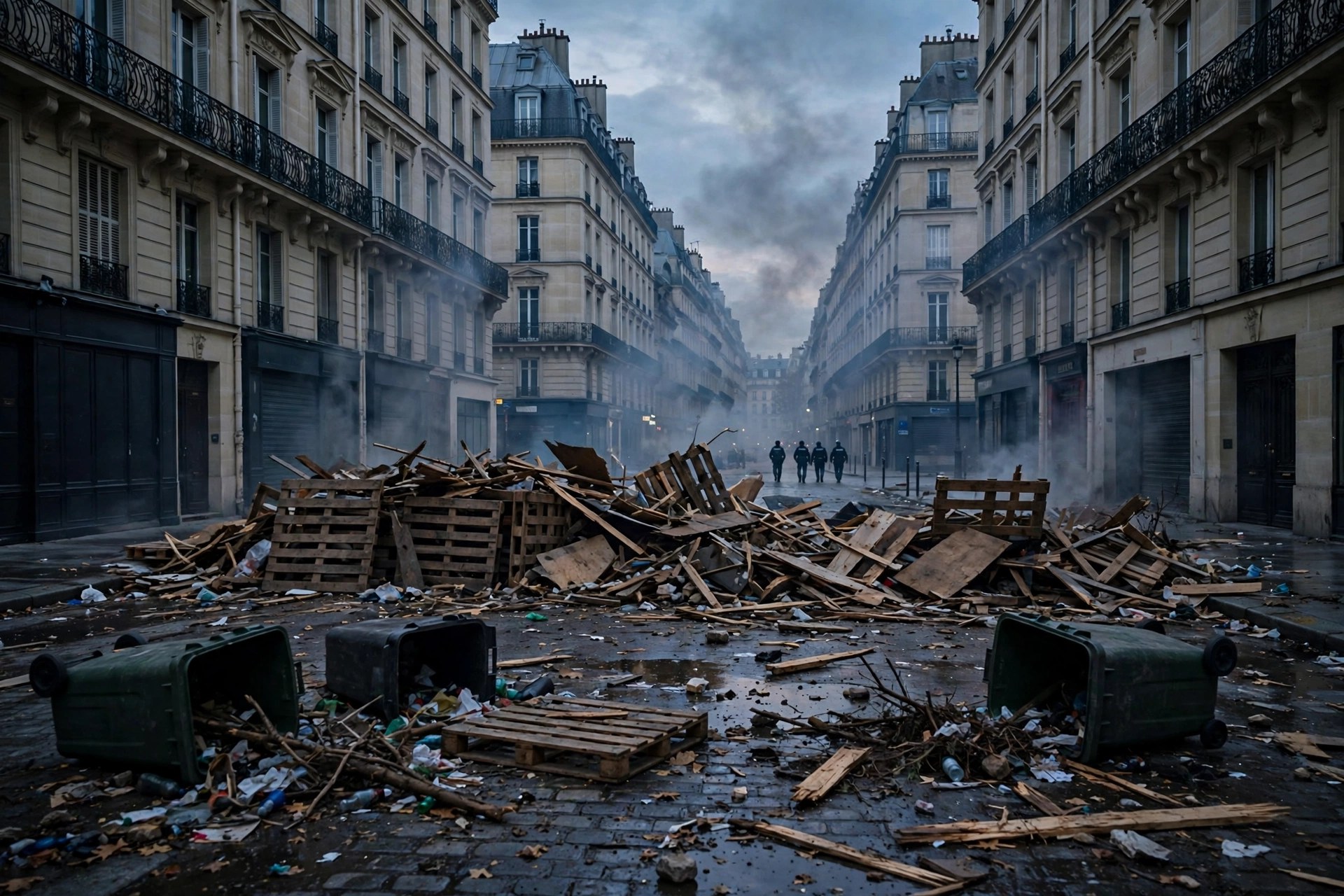
Paris prosecutors opened an attempted-murder probe after petrol bombs were thrown at about 15 gendarmes and police during Saturday's protests. No suspect has been arrested yet for that attack, though more than 770 people were arrested across France over the weekend.
Highlights
- Paris prosecutors opened an investigation on Sunday 1 November 2026 for “attempted murder of persons vested with public authority” after petrol bombs were thrown at security forces during protests in Paris.
- Prosecutors said explosive devices were thrown at around 15 gendarmes and police officers, and reported injuries included second-degree burns.
- No suspect had been arrested in connection with the petrol-bomb attack itself at the time of the reports, though investigators were analysing video and photos.
- The wider weekend saw more than 770 arrests across France and 159 members of law enforcement injured during protests and Halloween celebrations, according to the interior ministry.
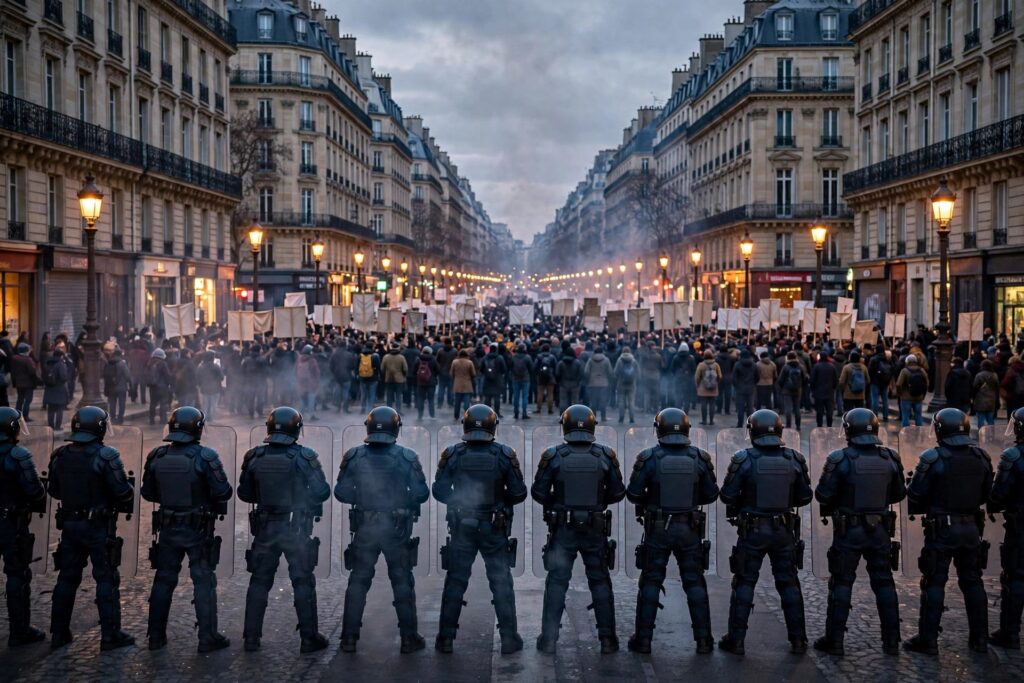
French prosecutors have opened an attempted-murder investigation after petrol bombs were thrown at security forces during protests in Paris, turning a violent fringe of an otherwise largely peaceful weekend of demonstrations into a criminal case with serious legal consequences.
The probe was announced on Sunday, 1 November 2026, a day after clashes erupted in Paris and other cities as hundreds of thousands of people staged a third weekend of protests against soaring living costs and deteriorating public services, according to Al Jazeera.
This is a follow-up to the wider wave of demonstrations covered in our report on France and Germany’s third weekend of Gen Z protests across Europe, and it focuses on what changed after Saturday night: the legal response to one specific attack, rather than the protests as a whole.
What prosecutors say happened
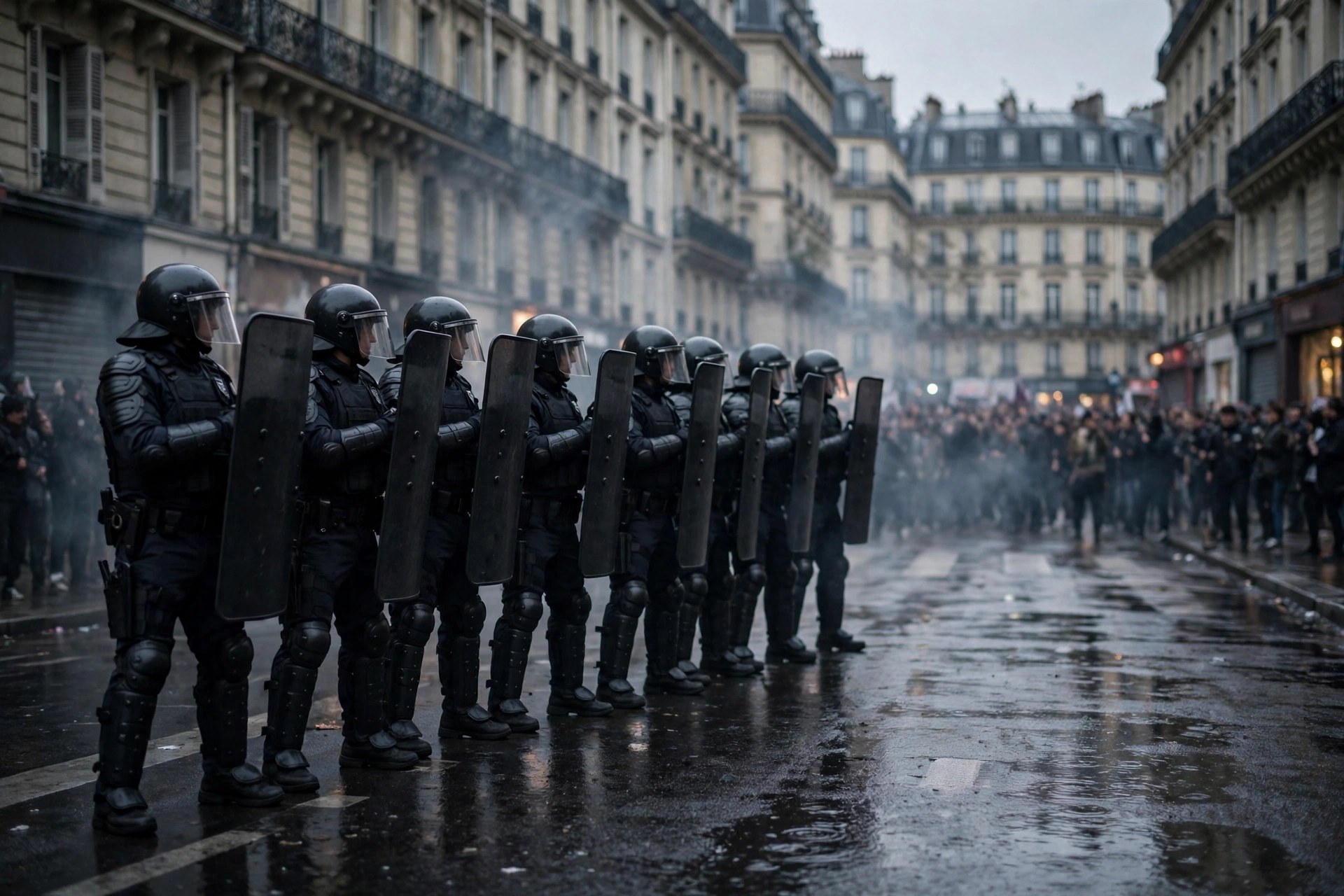
Video and images from the demonstrations showed a homemade incendiary device exploding at the feet of a security officer in protective gear, engulfing his lower body in flames, Al Jazeera reported.
The Paris prosecutor’s office said the investigation had been opened for “attempted murder of persons vested with public authority”, and added: “Explosive devices were thrown at around 15 gendarmes as well as police officers,” Channel NewsAsia reported, citing prosecutors. Gendarmes are military police officers who are part of the French armed forces.
The Paris police prefecture said several hundred rioters had attacked security forces with projectiles, including a Molotov cocktail, according to Al Jazeera. Prosecutors said an assessment of the injured was ongoing and that the reported injuries included second-degree burns.
The officer’s own account
The gendarme who was set alight told broadcaster RTL that his unit was “under assault”, with glass bottles, paving stones, shards of glass and firebombs thrown at them, Al Jazeera reported. In full, he said:
“We were hit by several significant incendiary devices.”
“The flammable substance was so greasy that I could feel it spreading across my skin. I kept wondering when it would stop because I really felt as though I had been coated by the heat itself.”
The officer, who received minor injuries, said the leg and shin protections on his riot uniform melted, and the gendarmerie said 13 members of his unit were injured, according to RTL as reported by Al Jazeera.
One detail in the footage has drawn separate attention. A video circulating on social media showed a man in a white T-shirt and straw hat rushing to help put out the flames with his bare hands, before being pushed away by another officer. The gendarme, identifying himself only as Captain Alexandre in accordance with French regulations, told AFP:
“In the heat of the action and under pressure, we thought this man had come to attack us, and my colleague pushed him away and used a restraint technique. This protester, or street medic, had actually come to help.”
He added: “I didn’t immediately understand why he was there because I was completely focused on a difficult operation while my trousers were on fire,” and said he was grateful for the man’s help and wanted to thank him, according to Channel NewsAsia, citing AFP.
No arrests yet for this attack — but suspects singled out
Despite the scale of the wider arrests, no suspect had been arrested at that stage in connection with the petrol-bomb incident itself, the prosecutor’s office said, adding that investigators were working to identify those responsible, Al Jazeera reported.
Prosecutors told AFP they were analysing videos and photos posted on social media and had singled out three individuals dressed in black in the style of Black Bloc protesters as suspects, according to Channel NewsAsia. That distinction matters: being singled out as a suspect in an ongoing investigation is not a charge, and no names have been published in these reports.
The wider weekend, in numbers — and what not to conflate
More than 770 people were arrested across France during the weekend, and a total of 159 members of law enforcement were injured during protests and Halloween celebrations, the interior ministry said, according to Al Jazeera. Those are weekend-wide figures, not figures for the petrol-bomb attack alone, and they should not be read as the toll of a single incident.
Interior Minister Laurent Nunez said on Saturday that the level of violence perpetrated by some was “extraordinary”, even though riots were less widespread than two weeks earlier, when France experienced some of its worst unrest in years, Al Jazeera reported.
The pattern is not confined to France. Youth-led anger over living costs, housing and strained public services spilled onto streets across Europe over the same weekend, a reminder that the French protests sit inside a wider European moment — just as student-backed politics in Serbia and political backlash in the Nordic countries show how quickly street and electoral politics are feeding into each other across the continent.
Why the “attempted murder” framing matters
Prosecutors did not open a routine public-order case. By framing the investigation as attempted murder of persons vested with public authority, they signalled that throwing an incendiary device at officers is being treated as an attack on life, not merely as disorder — a distinction that, if charges follow, would carry far heavier penalties than riot or vandalism charges.
That framing also raises the stakes for the investigation itself. Video evidence is central: prosecutors are working from footage posted on social media, which can help identify attackers but also needs careful verification before it becomes court evidence. The episode of the would-be helper being pushed away is a cautionary example of how fast, chaotic footage can mislead in the moment — and why investigators, not viral clips, should settle who did what.
Politically, the case lands six months before presidential elections, in a climate where law and order is already a campaign battleground, Al Jazeera noted. That timing does not change the facts of the investigation, but it does explain why the footage travelled so fast and why politicians reacted so quickly.
Public reactions
Marine Le Pen, leader of the far-right National Rally party, said on X that those responsible for the firebomb attack must be “punished with the utmost severity”, according to Al Jazeera.
Both Le Pen and Bruno Retailleau, head of the right-wing Republicans, described images of the officer in flames as “unbearable”, according to Channel NewsAsia. No other verified public-reaction statements were included here, because none were confirmed in the sources checked for this article.
What happens next
Three things are worth watching. First, whether investigators identify and arrest suspects for the petrol-bomb attack specifically, separate from the weekend’s wider arrests. Second, whether prosecutors move from investigation to formal charges, and on what evidence. Third, whether the next weekend of protests stays largely peaceful — because each violent incident so far has shifted attention away from the living-costs and public-services demands that brought hundreds of thousands onto the streets in the first place.
Until charges are filed, the honest summary is narrow: a serious investigation is open, a group of officers was targeted, injuries including second-degree burns were reported, and no one has yet been arrested for this attack. Anything beyond that would be speculation, and this article does not add it.