

Highlights
- Serbia’s Aleksandar Vucic conceded defeat on Sunday night, projecting the student-led Students’ List to win 135–140 of parliament’s 250 seats against around 105 for his Serbian Progressive Party (SNS)
- Vucic, who has dominated Serbian politics as prime minister or president since 2014, said the students took roughly 2.2 million votes to his coalition’s 1.7 million on the highest turnout in decades
- The snap election was called in September after almost two years of student-led protests over corruption, triggered by the 2024 Novi Sad train station canopy collapse that killed 16 people
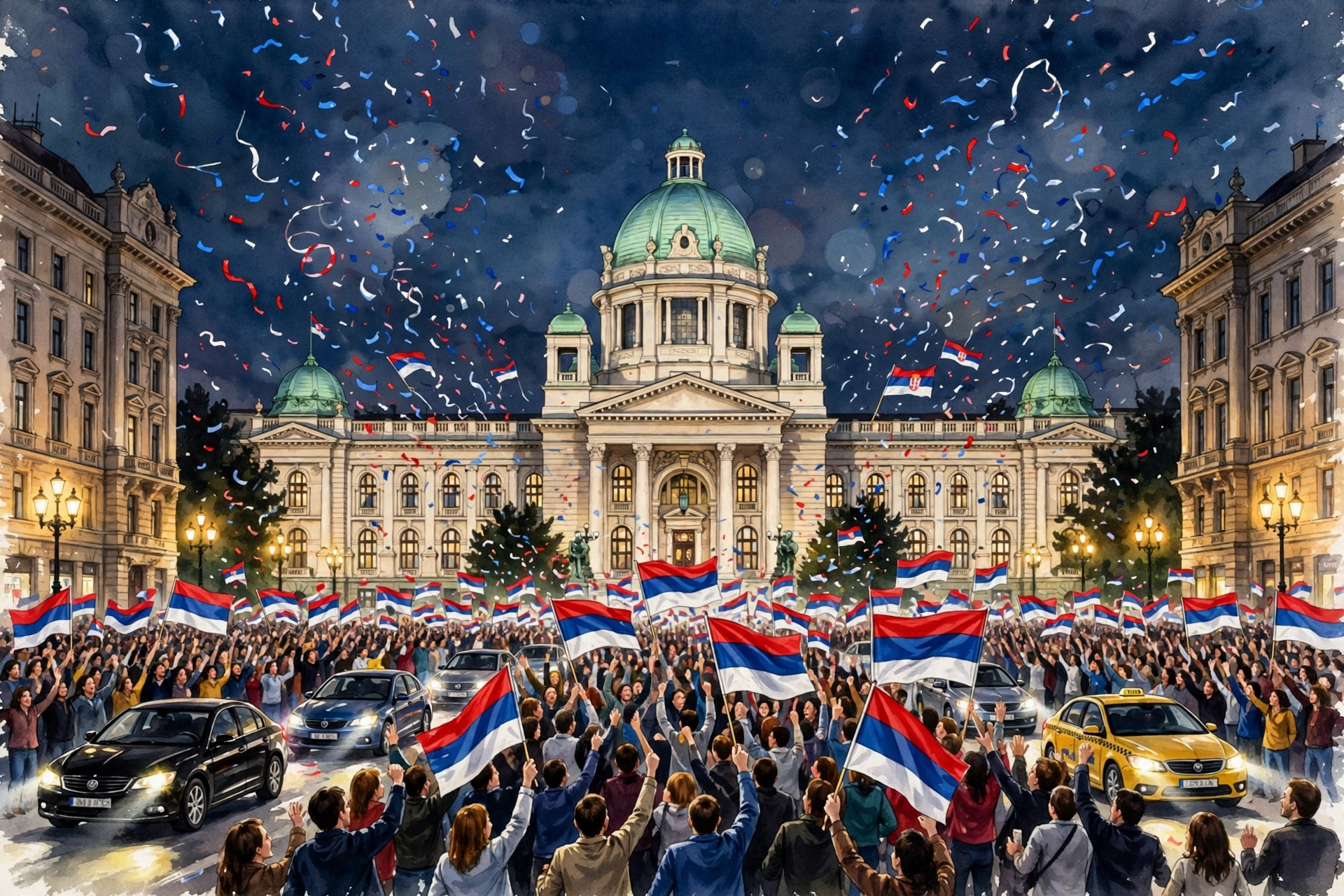
- Belgrade erupted in celebration within moments of the concession — but the victorious movement has no single leader and no experience of government
Ninety minutes after the polls closed, it was over
Serbia’s long-serving leader Aleksandar Vucic conceded defeat on Sunday in a snap parliamentary election, announcing the result himself barely an hour and a half after voting ended. “It is clear that we have lost these elections, the Student List has won,” Vucic told supporters, projecting that the students would take between 135 and 140 seats in the 250-seat parliament while his Serbian Progressive Party (SNS) would have around 105 (Reuters via The Times of Israel; CNN).
The concession, delivered at his party’s election-night event, came with the vote counts attached. Vucic said the Students’ List had won around 2.2 million votes compared with roughly 1.7 million for his own side (CNN). Independent projections pointed the same way: polling agencies Ipsos and CeSID put the “Student List – Students Win” at 52 per cent of the vote, well ahead of the SNS-led coalition on 39.3 per cent (CGTN).
Even in defeat, Vucic reached for familiar explanations, blaming Serbia’s independent media as well as alleged interference by unnamed European countries and an “American deep state” for the loss (CNN).
A canopy fell in Novi Sad — and the protests never stopped
The road to Sunday began with a disaster. The snap elections, called by Vucic in September, came after almost two years of student-led demonstrations against perceived corruption and creeping authoritarianism, triggered by the deaths of 16 people when a train station canopy collapsed in the city of Novi Sad in 2024 (Reuters via The Times of Israel). Protesters blamed the collapse on high-level corruption, cronyism and graft during renovation work at the station (CNN).
What made the students different from Serbia’s fractured traditional opposition was their structure — or lack of one. The newly formed Students’ List was shaped by university students, yet none of them actually appeared on the election list; its candidates were little-known experts, athletes, farmers and artists, an approach designed to counter Vucic’s one-man rule (CNN). Vilified by pro-government media, the students cycled and walked through the country to reach voters in rural areas — Vucic’s traditional strongholds (CNN).
The gamble that backfired
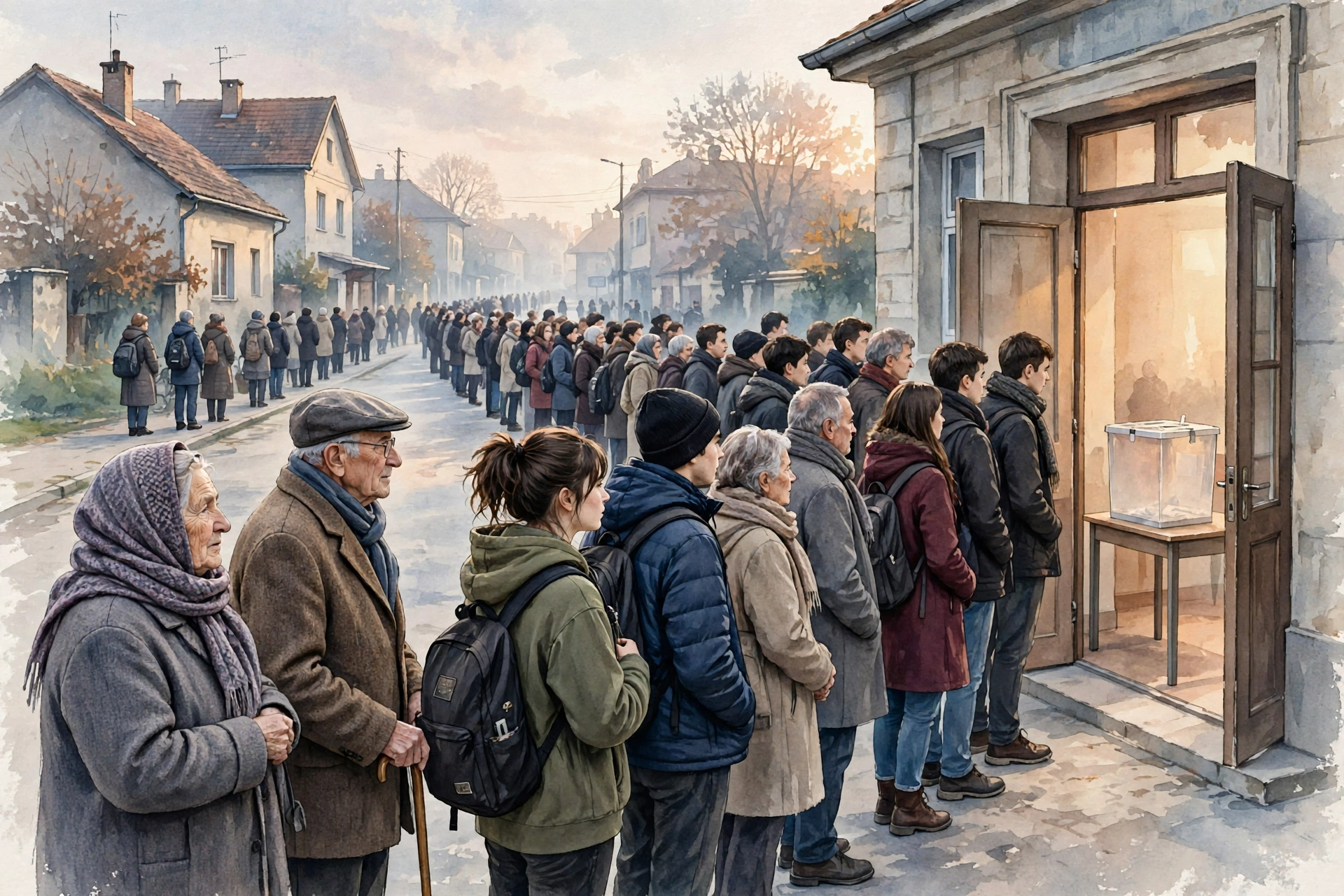
Vucic had set the trap for himself. He was seeking to become Serbia’s prime minister after serving two near-full terms as president, and he resigned the presidency last month to lead the campaign (CNN). By resigning as president and calling the election, he hoped to return as prime minister — a plan that borrowed a page from Vladimir Putin’s playbook, and backfired amid the highest election turnout in 33 years, at 69 per cent (The National). Monitors had predicted turnout could reach around 70 per cent, a level unseen in Serbia since 2000 (CNN).
The vote was not clean, even in victory. Independent election monitors reported dozens of cases of irregularities on Sunday, such as photographing of ballots suggesting pressure on voters and attempted vote buying (CNN). The European Union, for which Serbia is a candidate for membership, was closely watching the conduct of the vote (CNN).
Belgrade erupts — and the winners urge calm
Within moments of the announcement, the streets of Belgrade erupted in celebration: tens of thousands of people thronged the city’s main boulevards, cars honked, people danced and students shouted “victory” and “he’s done” (Reuters via The Times of Israel). Supporters chanted “Aleksandar is gone” as they flooded the streets of the capital and other cities (CNN).
The movement’s own first reaction mixed triumph with a plea for restraint. “This is the victory of the conviction that Serbia can and will do better,” said Radomir Saicic, one of the movement’s leaders. “We call on all citizens to act peacefully and in dignified manner. We didn’t fight for months to lose it today” (The National).
Why Serbia’s student victory reaches far beyond Serbia
First, this is the second strongman in Europe this year to fall to the young. The student victory echoed the recent electoral defeat of a Vucic ally in Hungary, where youth participation helped oust the autocratic Viktor Orbán after 16 years and bring in a new pro-European government — and it is likely to resonate as student movements across Europe protest over education standards and a lack of prospects (CNN; Reuters via The Times of Israel). A leaderless movement with no students on its own ballot has now beaten a machine that controlled the media, the institutions and 14 years of incumbency.
Second, the hardest part starts now. The movement doesn’t have a single leader or people with extensive experience in government, and the country now faces an unprecedented redrawing of its political spectrum, an extensive review of deals and policies and potential probes into the ruling elite (The National). Winning 135–140 seats on an anti-corruption mandate is one thing; deciding who governs, and how, is another — and Vucic’s 105-seat bloc remains the largest single opposition force waiting for any stumble.
Third, the concession itself is the story’s most remarkable detail. Strongmen rarely read out their own defeats 90 minutes after polls close. Vucic did — while blaming the media, Europe and an “American deep state” in the same breath (CNN). Whether that was a graceful acceptance of reality or a tactical retreat by a man who has dominated his country since 2014, the sentence he spoke is the one Serbia will remember: the Student List has won.