Dakar 2026 Opens as Africa Hosts Its First Ever Olympic Event
History in Dakar: the Youth Olympic Games opened on 31 October as the first Olympic event ever staged in Africa, with thousands of young athletes, a celebration of Senegalese culture, and two weeks of competition ahead.
Highlights
- Dakar 2026 is the first Olympic sporting event ever held in Africa
- Around 2,650 young athletes from 204 National Olympic Committees, alongside the Youth Refugee Olympic Team, will compete from 31 October to 13 November
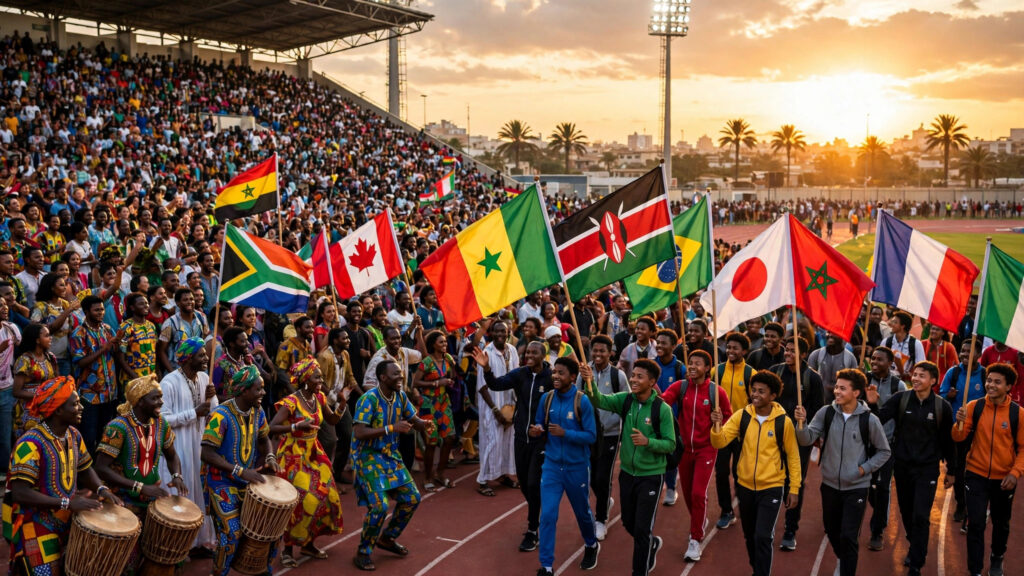
- The opening ceremony took place at the 55,000-capacity Abdoulaye Wade Stadium in Diamniadio, built around the theme ‘The Rise of Sitoé’
- The Games feature 25 competition sports and 10 engagement sports across Dakar, Diamniadio and Saly
- The production brought together 1,115 performers, including 628 dancers, with nearly 1,500 costumes made locally
A historic opening night
The Youth Olympic Games Dakar 2026 have finally begun. The colourful opening ceremony at the 55,000-capacity Abdoulaye Wade Stadium in Diamniadio, which paid tribute to Senegalese culture, music and art, officially launched the fourth edition of the Youth Olympic Games and the first Olympic event in Africa Olympics.com.
Dakar 2026 marks the first Olympic sporting event held in Africa, with approximately 2,650 young athletes from 204 National Olympic Committees, alongside the Youth Refugee Olympic Team, taking part from 31 October to 13 November Olympics.com. The Games feature 25 competition sports and 10 engagement sports across Dakar, Diamniadio and Saly, combining competition with a programme of educational and cultural activities.
For Senegal, the night was the end of a long road. Senegal first won the rights to host the event in 2018 and was scheduled to stage the competition in 2022, but COVID-19 forced organisers to push the event back another four years Olympics.com. Eight years after winning the bid, the Games finally opened on African soil.
A ceremony steeped in Senegalese culture
The opening ceremony celebrated Senegal’s tradition of teranga, or hospitality, through a journey connecting Africa’s past, present and future Olympics.com. Built around the theme ‘The Rise of Sitoé’, the show took spectators on a journey through the past, present and future, with music, dance, sport and storytelling providing the backdrop Olympics.com.
The story was told through three symbolic characters: Alkebulan, the mother representing ancestral Africa; Keb, her son, symbolising the continent’s present; and Sitoé, a young girl representing the Africa of tomorrow, passing the baton of knowledge between generations Olympics.com. Traditional Senegalese dance, wrestling and percussion featured alongside contemporary music, hip-hop and visual arts, with performances by Senegalese artists Baaba Maal, Kiné Lam and Daara J Family, complemented by Nigerian slamming artist IB Quake and Gambian kora musician Sona Jobarteh Olympics.com.

The scale of the production was striking. The production brought together 1,115 performers, including 628 dancers, and nearly 1,500 costumes were produced through more than 5,000 hours of work, highlighting the skills of Senegalese designers, tailors and craftspeople Olympics.com. A tribute to the continent’s 54 countries celebrated unity and shared heritage, and Senegalese-born social media personality Khaby Lame featured in a live-painting sequence by artist Boubou Design.
Coventry’s message to the athletes
International Olympic Committee (IOC) President Kirsty Coventry addressed the young athletes and spectators, reflecting on the significance of bringing the Youth Olympic Games to Africa for the first time Olympics.com.
This is the Africa that I am so proud and so excited for the world to experience.
Coventry, a former Olympic swimming champion from Zimbabwe, is the first woman and the first African to lead the IOC, and Dakar 2026 is the first Youth Olympic Games under her presidency. She told the athletes they were going to have the time of their lives, and praised Senegal’s young people — not just the athletes competing, but the young Senegalese who helped bring the Games to life — describing the spirit of teranga, the Wolof word for hospitality Olympics.com.
The Games were officially declared open by Senegalese President Bassirou Diomaye Faye, before the Youth Olympic flame completed its journey across Senegal with the lighting of the cauldron Olympics.com. The local organising committee president, Mamadou Diagna Ndiaye, told the ceremony that for the first time in history the Olympic flame burns on the continent, and for the first time the youth of the world is hosted by Africa Olympics.com.

What it means
Following Singapore 2010, Nanjing 2014 and Buenos Aires 2018, the fourth Summer Youth Olympic Games mark a new chapter for the Olympic Movement, offering young athletes an opportunity to compete, connect and experience the Olympic values while inspiring a new generation across Africa and beyond Olympics.com. The Youth Olympic Games are deliberately different from the senior Games: athletes are teenagers, education and cultural exchange sit alongside competition, and the event is designed as a launchpad rather than a pinnacle.
For Africa, the symbolism goes beyond sport. A continent that has shaped Olympic history through its athletes now hosts an Olympic event for the first time, in a city that waited eight years from bid to opening night. Over the next two weeks, around 2,700 young athletes will compete across 25 sports — but the opening ceremony already delivered the message Dakar wanted to send: Africa is no longer on the margins of the Games, but at their heart.