Spain’s Deadliest Train Crash Since 2013: Toll Reaches 68 as the Town of Urda Becomes a Rescue Centre
The crash happened just before 9 a.m. on one of Europe's flagship high-speed lines. By nightfall, the confirmed death toll had climbed to at least 68, a small town's pharmacist was describing scenes no one should have to describe, and Spanish football had postponed an entire round of cup matches. It is the second deadly collision on the same line in nine months.
Highlights
- Two high-speed trains collided in Spain on Wednesday just before 9 a.m. (0800 GMT), killing at least 68 people and injuring nearly 80, according to Reuters
- The crash, near the towns of Los Yébenes and Urda in Toledo province, is Spain’s deadliest since 2013 and the second collision between high-speed trains on the Madrid–Andalusia line in nine months — a January accident on the route killed 46 people
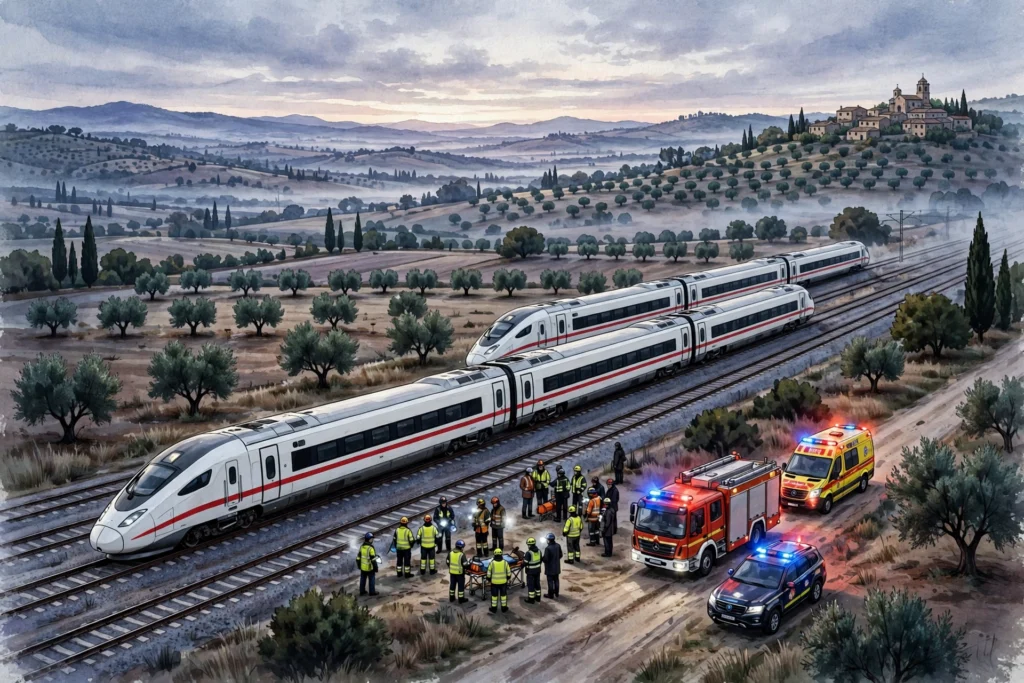
- Rail operator Adif described a rear-end collision and suspended traffic on the Madrid–Andalusia high-speed line; two rail cars reportedly left the tracks and fell down an embankment
- Residents of Urda were among the first on the scene with first-aid supplies, blankets and water; the town’s 78-year-old pharmacist was among those who rushed to help
- The Royal Spanish Football Federation postponed all 24 of Wednesday’s Copa del Rey first-round matches as a mark of respect
What happened on the Madrid–Seville line
Two high-speed trains collided in Spain on Wednesday just before 9 a.m. (0800 GMT), killing at least 68 people and injuring nearly 80, and prompting the suspension of rail services between Madrid and the southern Andalusia region (Reuters). Rail operator Adif said traffic on the Madrid–Andalusia high-speed line was suspended following a rear-end collision between two trains (Reuters). According to El País, cited by Reuters, the accident occurred between the towns of Los Yébenes and Urda in the province of Toledo, and involved a high-speed AVE train that had left Madrid bound for Seville and an Iryo train travelling in the opposite direction; two of the rail cars involved reportedly left the tracks and fell down an embankment (Reuters).
The death toll climbed through the day as rescuers worked through the wreckage — early official counts were far lower, which is common in the first hours of a disaster of this scale, before settling at at least 68 dead in Reuters’ later reporting (Reuters). Reuters describes the crash as the deadliest in Spain since 2013, and — in the detail that will dominate the investigation — the second collision between high-speed trains on the same line in nine months, following an accident in January on the route that killed 46 people (Reuters).
The town that reached the wreck first
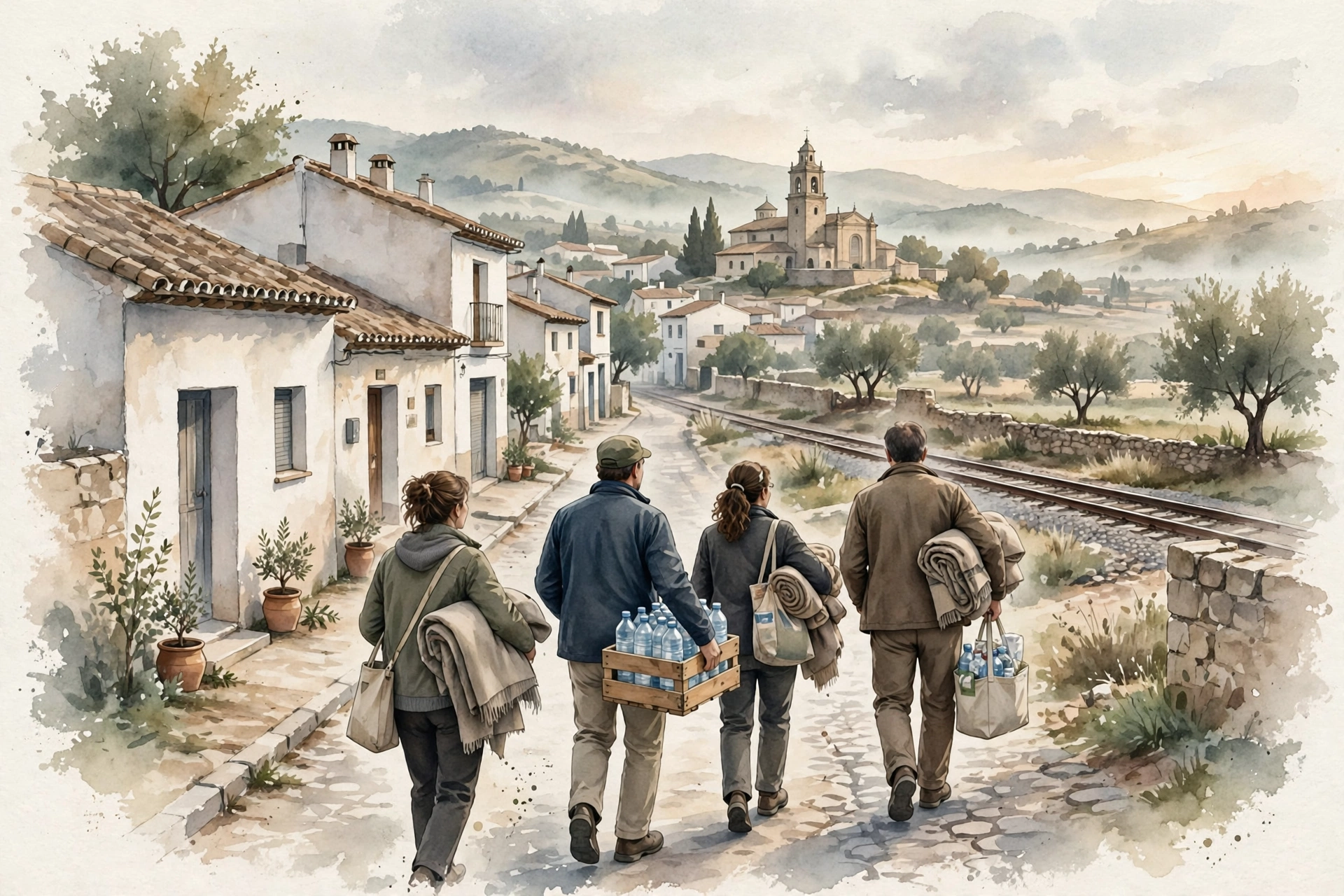
Before the full emergency response could assemble, the nearest community did what it could. Shocked residents of Urda swung into action to help as soon as they heard of the crash on the railway line a few kilometres from the town (Reuters). Urda’s 78-year-old pharmacist, Antonio Garcia, said he was one of the first on the scene, jumping into his car after his daughter told him of the crash; he brought first aid materials, painkillers and tranquillisers from his pharmacy, as well as blankets to treat the injured (Reuters). Other locals brought bottles of water for passengers evacuated from the two trains (Reuters).
Garcia’s account of what he found — one carriage wedged inside another — conveyed the force of the impact:
“Just imagine what was inside,” said Garcia. (Reuters)
He described one passenger who had lost an arm calmly asking for an ambulance, and another saying his final goodbyes to his family. “His last words were ‘God is good’. For those of us who are believers, these are very beautiful words,” said Garcia (Reuters).
Football stops, and the questions start
Spanish football responded within hours. The Royal Spanish Football Federation (RFEF) postponed Wednesday’s 24 Copa del Rey first-round matches following the collision, saying the games were postponed “as a show of respect and solidarity with all the victims,” with new dates to be announced (Reuters). The crash also disrupted rail services between Madrid and Andalusia, affecting travel for teams and fans (Reuters).
What this disaster actually tells us
First, the pattern matters more than the single event. One deadly crash on a high-speed line is a tragedy; two in nine months on the same Madrid–Andalusia route — January’s killing 46, Wednesday’s at least 68 — is a systemic question about signalling, scheduling, maintenance or oversight on one of Europe’s most prestigious rail corridors (Reuters). The investigation will have to answer why a rear-end collision between two modern high-speed trains was possible at all.
Second, the first responders were neighbours. The most consequential help in the first minutes came not from a national agency but from a 78-year-old pharmacist with a car full of supplies and townspeople carrying water (Reuters). Disaster planning rarely budgets for that — and repeatedly depends on it.
The bottom line: Spain woke on Thursday to its worst rail disaster in thirteen years, a suspended flagship rail line, and a small town in Toledo province that will be remembered for running toward the wreck. The official investigation now carries a burden heavier than usual: it must explain not only Wednesday morning, but why January did not prevent it.