
Pakistan’s Exports to Europe Dip 1.84% Despite GSP+ in First Quarter
Pakistan's exports to Europe contracted 1.84% to $2.350 billion in the first quarter of FY27 despite GSP+ status, State Bank data compiled by Dawn shows, as western Europe shrank 8.51%.
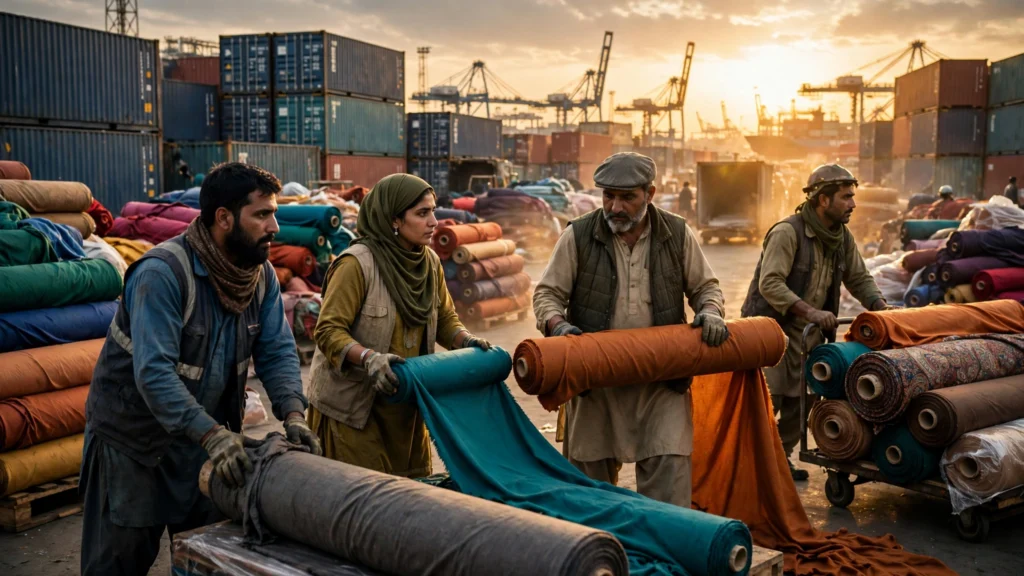
Pakistan’s exports to Europe have slipped in the first quarter of the new fiscal year despite the country’s GSP+ preferential access to the European Union, underlining how exposed its textile-led trade remains to conflict, energy costs and competition. Data compiled by the State Bank of Pakistan showed exports to European countries contracted 1.84 per cent to $2.350 billion in the first quarter of FY27, from $2.394 billion a year earlier (Dawn, 5 November 2026).
Highlights
- Exports to Europe fell 1.84 per cent to $2.350 billion in July-September FY27, per State Bank data compiled by Dawn
- Western Europe, the largest destination, shrank 8.51 per cent to $1.065 billion
- Northern Europe rose 21.07 per cent and southern Europe grew 5.26 per cent
- Dawn cited the Middle East conflict and EU preferential access for India as key pressures
A small headline fall, a bigger regional split
The overall decline looks modest, but the regional breakdown tells a sharper story. Exports to western Europe — which includes Germany, the Netherlands, France, Italy and Belgium and accounts for the largest share of Pakistan’s exports to the EU — shrank 8.51 per cent to $1.065 billion in 1QFY27 from $1.164 billion a year earlier (Dawn, 5 November 2026). Germany fell 12.77 per cent to $389.116 million, the Netherlands eased 3.07 per cent to $370.005 million, France slipped 0.47 per cent to $136.030 million and Belgium declined 7.57 per cent to $127.431 million, according to the same data.
There were offsets. Proceeds from southern Europe grew 5.26 per cent to $879.896 million, helped by Spain rising 17.78 per cent to $451.244 million and Greece growing 3.52 per cent to $34.961 million, even as Italy declined 8.49 per cent to $298.731 million (Dawn, 5 November 2026). Northern Europe increased 21.07 per cent to $236.321 million, while eastern Europe fell 15.05 per cent to $168.761 million. In the post-Brexit market, exports to the United Kingdom rose 6.64 per cent to $612.305 million.
Why GSP+ alone is not enough
GSP+ gives Pakistani goods preferential access, but it does not guarantee orders. Dawn reported that the ongoing Middle East conflict has accelerated the decline in exports to these markets, along with the European Union’s preferential market access offered to India, one of Pakistan’s key competitors in textiles (Dawn, 5 November 2026). Trade analysts quoted in the report warned that the conflict could further dampen export demand, as rising energy costs squeeze consumer spending in Europe, which is already under strain from the economic fallout of the Ukraine war.
That combination — a demand squeeze in Europe and a stronger preferential offer for a direct rival — is precisely the kind of structural pressure that tariff status alone cannot fix. It sits alongside the longer-running trade disruptions examined in our report on Pakistan’s $40 billion loss since trade with India was halted, and the energy channel matters too: when oil prices and the rupee move sharply, exporter margins and European buyers’ budgets both feel it within weeks.

What policymakers will be watching
Dawn said the figures raise serious concerns for policymakers, and the country-level detail shows why. Pakistan’s two biggest western European markets, Germany and the Netherlands, both shrank, while growth came from smaller or more peripheral destinations. If that pattern holds for a second quarter, the conversation will shift from a soft start to the year to competitiveness itself: energy costs at home, reliability of supply during a regional conflict, and whether preferential access for India is beginning to divert orders that Pakistan once took for granted.
For exporters, the immediate lesson is diversification within Europe rather than away from it. Northern Europe’s 21.07 per cent rise and Spain’s strong quarter show demand has not disappeared; it has moved. Winning it back in the core western markets will take more than GSP+ paperwork.