El Salvador Rushes 2,000 Troops to Haiti to Rescue Four Technicians
Around 2,000 Salvadoran soldiers have deployed to Haiti in just 10 days to find four aviation technicians missing since an ambush in Croix-des-Bouquets. President Nayib Bukele says El Salvador is covering 90% of the cost, while experts warn the mission could escalate violence.
Highlights
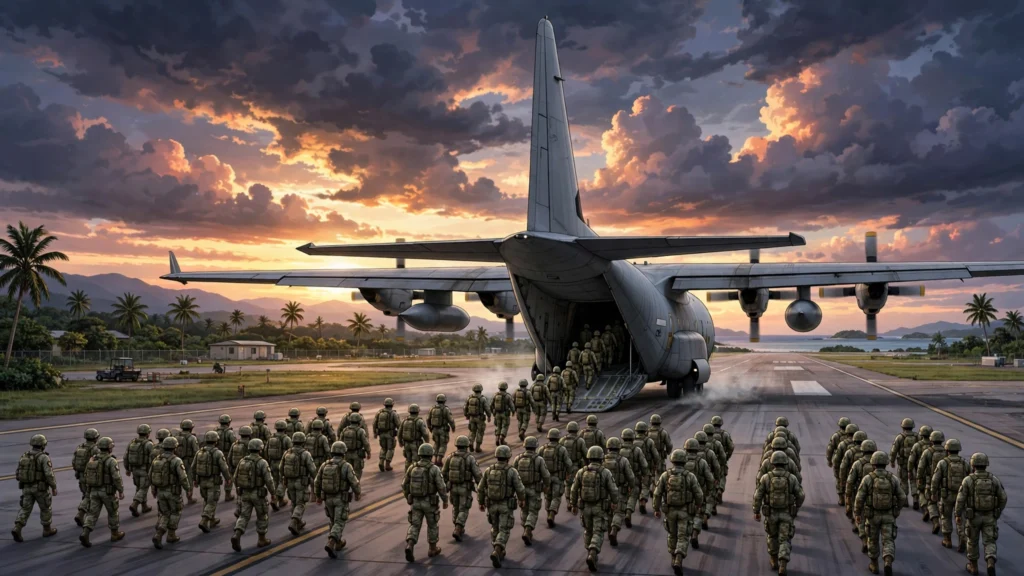
- El Salvador rushed around 2,000 soldiers to Haiti by Wednesday night 28 Oct, with two sources saying the force would for now be capped at 2,500
- The mission aims to rescue four Salvadoran aviation technicians missing since an ambush on 18 Oct in Croix-des-Bouquets
- President Nayib Bukele said on Thu 29 Oct that El Salvador was covering 90% of the deployment’s costs and deployments were nearly finished
- A CID Gallup poll showed 86% of Salvadorans approved of the mission, though 82% also expressed concern for their countrymen
- Experts warned of unclear command, risks to civilians, and a picture pointing towards escalation rather than stabilisation
A deployment built in 10 days
El Salvador has rushed around 2,000 soldiers to Haiti, a figure given as of Wednesday night 28 Oct by a security official to Reuters, with two sources saying the force would for now be capped at 2,500 (Reuters). The number should be read as the 28–29 Oct Reuters figure, not a final total, because earlier counts were lower as troops arrived in waves.
The speed is the story as much as the size. Reuters noted the deployment size matched in 10 days what the UN-backed force struggled to deploy in more than a year (Reuters).
President Nayib Bukele said on Thu 29 Oct that El Salvador was covering 90% of the deployment’s costs and that deployments were nearly finished (Reuters). Washington has not publicly supported the mission, but a US military official said Pentagon C-130 aircraft helped it deploy, according to Reuters. The gap between public silence and practical help leaves the mission’s international backing deliberately unclear.
The ambush that triggered the mission
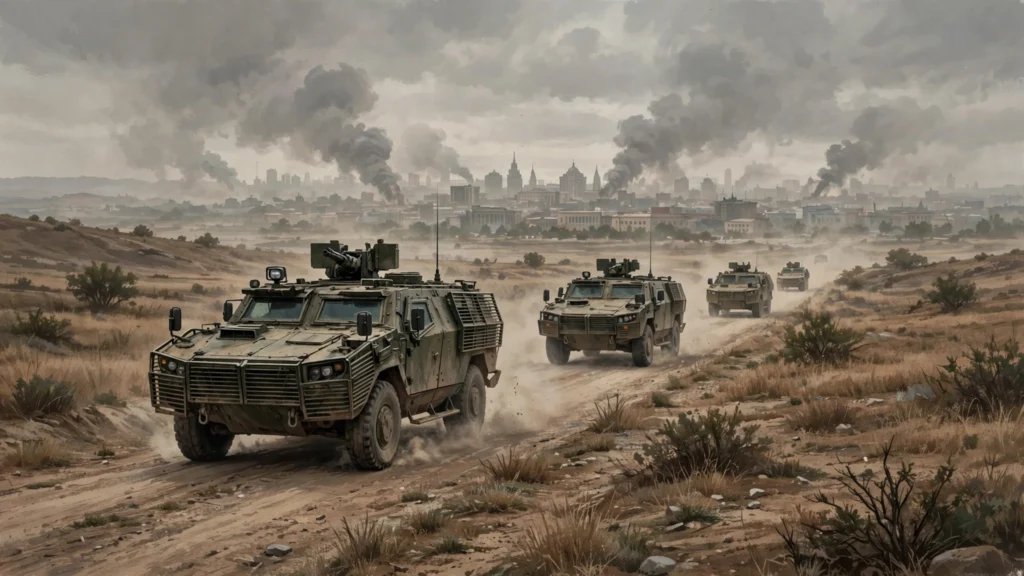
The four men at the centre of the operation are Salvadoran aviation technicians from the UN-backed Gang Suppression Force (GSF), missing since they jumped from a burning armoured vehicle during an ambush on 18 Oct 2026 in Croix-des-Bouquets, a gang-controlled area on the outskirts of Port-au-Prince (Reuters).
No gang has claimed responsibility, according to the BBC coverage cited in reporting on the case. The uncertainty deepened when an NGO handed over four badly burned bodies claimed to be the men. Bukele rejected them, saying the remains included a child and a body in another country’s uniform (Reuters). Without confirmed identification, the rescue framing remains active rather than shifting to recovery.
Bukele set out his position in a post in Haitian Creole on Thu evening, reported by CNN:
“This is not an operation against the Haitian people nor an invasion of Haiti… Our only goal is to bring our four aviation technicians back home. Furthermore, we intend to teach a lesson to the gangs.” (CNN)
A country already in deep crisis
The deployment lands in a Haiti where gang violence has killed more than 5,700 people this year, according to UN figures cited by BBC. Croix-des-Bouquets is described in the brief as gang-controlled, which helps explain both the original ambush and the scale of force El Salvador says is needed to operate there.
Haiti’s electoral council scheduled a first-round presidential and legislative vote for 18 July 2027, with a second round on 4 October 2027, according to Reuters via Daily Maverick (Reuters).
In Washington, debates over military planning have also turned on who directs operations, a theme explored in our coverage of the Pentagon planning shake-up. In Haiti, Reuters reported experts warning that this mission has no clarified command structure or rules of engagement.
Public reaction at home and in Haiti
At home, support is high but anxious. A CID Gallup poll showed 86% of Salvadorans approved of the Haiti mission, though 82% also expressed concern for their countrymen, according to Reuters (Reuters). Those two numbers together capture the domestic politics: backing for decisive action, paired with a clear awareness of risk.
In Haiti, the reaction described by Reuters was more sceptical. Residents were sceptical of another foreign intervention amid reports of heavy gunfire and drones around Croix-des-Bouquets. Experts also warned the mission carries risks to civilians — a concern that grows when an operation’s rules of engagement have not been clarified publicly.
Analysts offered a more cautious read on Bukele’s motives and prospects. Sam Vigersky of the Council on Foreign Relations told Reuters:
“The overall security picture is not pointing towards one of stabilization, it’s pointing towards one of escalation.” (Reuters)
Maria Fernanda Arocha, an ACLED analyst, told Reuters: “This could help increase support for Bukele if this helps his narrative of being an anti-gang force in the region and delivering results. We don’t know if this will bring the results he is expecting.” (Reuters)
What this means
This is, on its stated terms, a rescue mission for four men. In practice, a deployment of around 2,000 troops, largely funded by El Salvador itself, is also a regional statement about Bukele’s anti-gang model and his willingness to export it.
The risks are immediate and structural: fighting around a gang-controlled area puts soldiers and civilians in danger, especially without publicly clarified rules of engagement, while an operation launched without public US support raises unanswered questions about coordination, duration and exit.
If the technicians are found alive, Bukele will claim a result the slower UN-backed effort could not deliver. If they are not, or if civilian harm rises, the same speed that made the deployment impressive will make its costs harder to defend. For now, the men are still missing and no gang has claimed the ambush.