BYD’s Third-Generation Qin Plus DM-i Is Bigger, Goes 220 km on Electricity Alone — and Starts at $11,500
BYD's best-selling sedan family just got a generational reset aimed squarely at China's brutal price war: the third-generation Qin Plus DM-i, launched October 27, is bigger in every dimension, travels up to 220 kilometres on battery power alone, claims up to 2,290 kilometres of combined range — and starts at RMB 76,900, about $11,500, at limited-time pricing. The catch is in the sales chart: the nameplate that sold 480,000 cars in 2024 managed just 10,652 in September. This car has to reverse that.
Highlights
- BYD officially launched the third-generation Qin Plus DM-i on October 27, 2026, in three variants priced from RMB 76,900 (about $11,500) to RMB 97,900 (about $14,700) for a limited time
- The sedan grows substantially: 4,840 mm long, 1,900 mm wide and 1,498 mm tall on a 2,800 mm wheelbase — 75 mm longer, 63 mm wider and with an 82 mm longer wheelbase than the outgoing car, taking it close to midsize dimensions
- Two battery packs, 16.227 kWh and 24.337 kWh, deliver CLTC electric ranges of 140 km and 220 km; combined range reaches up to 2,290 km, with lowest WLTC fuel consumption of 3.6 L/100 km on a depleted battery
- The powertrain pairs a 1.5-litre engine of up to 74 kW with a 120 kW permanent-magnet synchronous motor on BYD’s fifth-generation DM plug-in hybrid technology
- The top-spec model offers optional DiPilot 300 (“God’s Eye B”) driver assistance with LiDAR, including urban and highway navigation assistance and all-scenario intelligent parking
A volume car, deliberately moved up in size
BYD officially launched the third-generation Qin Plus DM-i on October 27, with three variants priced from RMB 76,900 ($11,500) to RMB 97,900 ($14,700) for a limited time (ChinaEVHome). ChinaEVHome’s launch report frames the strategy in its opening line: BYD has bumped the Qin Plus DM-i to midsize dimensions with a major redesign, to better compete on value and space against larger sedans amid intense price and market-share pressure (ChinaEVHome).
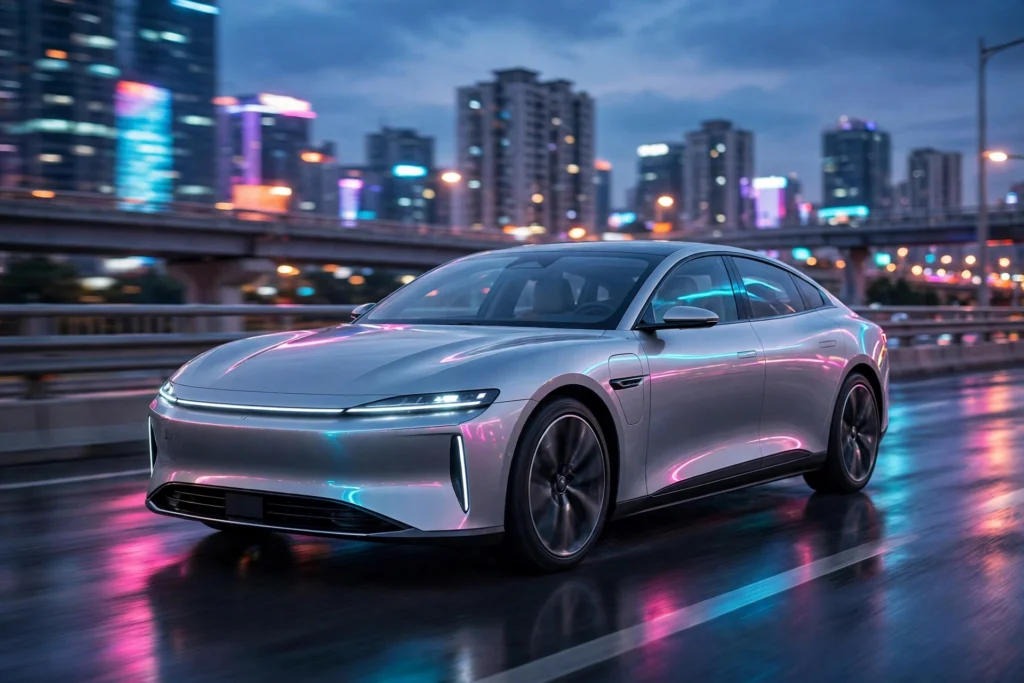
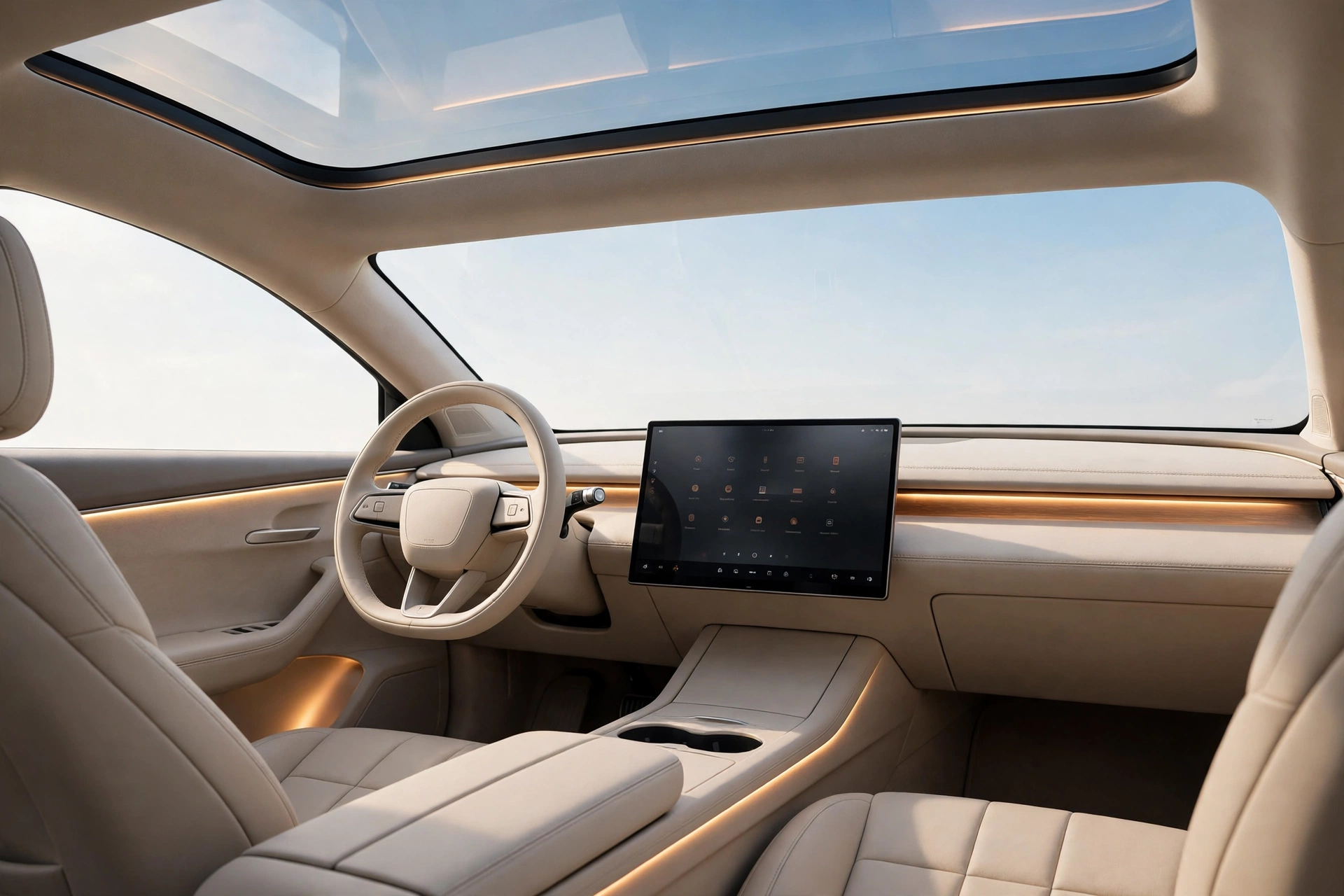
The growth is precise. The new car measures 4,840 mm long, 1,900 mm wide and 1,498 mm tall, with a wheelbase of 2,800 mm; against the current model its length increases by 75 mm, its width by 63 mm and its wheelbase by 82 mm, bringing it closer in size to a midsize sedan (ChinaEVHome). The redesign is visible as well as measurable: BYD has removed the prominent black grille of the outgoing model, giving the car a cleaner front end more reminiscent of an all-electric vehicle, and offers nine exterior colours, including two two-tone options (ChinaEVHome). Inside, the cabin is fully redesigned — a two-spoke steering wheel for the first time in the model, a 12.8-inch central touchscreen, a panoramic sunroof with a power sunshade, multicolour ambient lighting and a choice of Beige or Dark Grey interiors, with the top-spec variant getting a more advanced smart cockpit (ChinaEVHome).
The hybrid numbers: 220 km electric, 2,290 km combined, 3.6 litres
The third-generation car retains BYD’s fifth-generation DM plug-in hybrid technology, combining a 1.5-litre engine producing up to 74 kW with a permanent-magnet synchronous motor rated at 120 kW (ChinaEVHome). Two battery packs are available — 16.227 kWh and 24.337 kWh — delivering CLTC-rated electric ranges of 140 km and 220 km respectively (ChinaEVHome).
According to BYD, the car’s lowest WLTC fuel consumption with a depleted battery is 3.6 L/100 km, and its combined driving range reaches up to 2,290 km (ChinaEVHome). Two cautions belong with those figures. The range numbers are CLTC-cycle results, a Chinese test cycle that is systematically more generous than WLTP or EPA measurements, so real-world electric range will be shorter; and the headline prices are explicitly limited-time launch pricing, not a guaranteed permanent list price. Neither caution is unusual in this segment — but in a market where rival plug-in hybrids are being repriced monthly, both will decide how long the launch offer stays competitive. It is a different answer to the same fuel-economy pressure that is pushing regulators elsewhere toward measures like India’s E100 flex-fuel vehicle rules.
LiDAR at this price is the real provocation
The specification most likely to unsettle rivals sits on the options list of the top variant. The top-spec model can optionally be equipped with BYD’s DiPilot 300 driver assistance system, known as “God’s Eye B”, which uses LiDAR; its functions include urban navigation assistance, highway and expressway navigation assistance, all-scenario intelligent parking and comprehensive safety assistance (ChinaEVHome).
LiDAR-based urban navigation assistance in a sedan family that starts under $12,000 is the kind of move that compresses the whole market’s pricing assumptions — although ChinaEVHome’s own analysis flags the execution risks honestly: cooling Qin sales, feature rollout timing, the cost of the LiDAR option, and sustaining margins at promotional prices (ChinaEVHome).

The problem this car has to solve
The Qin Plus has been one of BYD’s key volume models for years — it sold more than 480,000 units in 2024, followed by 387,315 units in 2025 — but sales have weakened in 2026: the model sold 10,652 units in September, ranking 16th among sedans in China (ChinaEVHome). Read against those numbers, every choice in this launch — the size increase, the 220 km electric option, the LiDAR offer, the limited-time pricing from RMB 76,900 — is aimed at one thing: giving a fading volume champion a reason to be cross-shopped against the larger sedans buyers have been drifting towards.
The Qin does not carry that job alone. BYD also plans to launch the third-generation Tang and Han in the fourth quarter as it updates other established models in its lineup, and the Dynasty series’ two flagship vehicles, the DaHan and DaTang, have also entered the market — the DaTang delivered 10,997 units in September, topping China’s large SUV sales rankings (ChinaEVHome).
The bottom line: on paper, this is the strongest Qin Plus BYD has ever built — bigger, longer-legged on electricity, more economical on petrol, and available with LiDAR driver assistance at a price point where that used to be unthinkable. The open question is not the car but the calendar: with September sales at 10,652 units against a 480,000-unit year in 2024, BYD needs the third-generation car to convert launch-week attention into orders before the limited-time pricing expires — and before the price war moves again.