
Apple Launches M6 MacBook Pro and iMac: Faster AI, Wi-Fi 7, and a Touchscreen Mac Still to Come
Apple has opened its big Mac week with silicon rather than spectacle: a 14-inch MacBook Pro running the new M6 chip, a refreshed 24-inch iMac at the same $1,499 starting price, and pre-orders that open today, October 28. The bigger design story — a first touchscreen, OLED MacBook Pro — is still expected at Wednesday's 'Pro and Tell' event in Los Angeles. Here is everything Apple has actually confirmed so far, separated from what remains a report.

Highlights
- Apple announced the new 14-inch MacBook Pro with the M6 chip on Tuesday, October 27, 2026, alongside a refreshed 24-inch iMac also powered by M6
- The MacBook Pro starts at $1,999 with 16GB of unified memory and 1TB of storage; the iMac starts at $1,499, the same price as the model it replaces
- Pre-orders for both open today, Wednesday, October 28, with availability beginning Friday, November 6
- Apple claims the MacBook Pro’s 12-core GPU is up to 30% faster than M5, its dual 16-core Neural Engine up to 1.9x faster than M5, and battery life of up to 24 hours — the longest ever in a Mac
- A redesigned MacBook Pro with an OLED touchscreen remains a reported expectation for Wednesday’s “Pro and Tell” event in Los Angeles, not an Apple announcement
What Apple actually announced on Tuesday
Apple unveiled the 14-inch MacBook Pro powered by its new M6 chip on Tuesday, October 27, with pre-orders opening on Wednesday, October 28 and the first orders arriving on Friday, November 6 (9to5Mac). The machine starts at $1,999 with 16GB of unified memory and 1TB of storage, comes in silver and space black, and replaces the M5 model as the base MacBook Pro in the lineup, while Apple continues to sell the M5 Pro and M5 Max models (9to5Mac).
In Apple’s own announcement language, the new laptop is aimed at “college students, business users, creators, and more”, and the company says the M6 “features an advanced 12-core CPU with the world’s fastest CPU core, so everything from productivity tasks to more demanding pro workflows feels incredibly fast and responsive” (9to5Mac). Shelly Goldberg, Apple’s vice president of hardware engineering, put the pitch in similar terms: “The 14-inch MacBook Pro is the pro laptop of choice for a wide range of users—from college students, to business professionals across every industry, to multidisciplinary creators doing it all on one device. With the powerful M6 chip, we’re taking performance to the next level, with a boost in CPU speed and graphics and even more powerful capabilities for on-device AI” (PYMNTS).
The M6 numbers, with the caveat they deserve
Apple’s performance claims for the M6 MacBook Pro are specific: a 12-core GPU up to 30% faster than M5, a dual 16-core Neural Engine up to 1.9x faster than M5, up to 13x faster time-to-first-token for LLM prompt processing compared with the 13-inch M1 MacBook Pro, and up to 2.5x faster Xcode project builds against the same M1 machine (9to5Mac). PYMNTS summarises Apple’s headline AI claim as “25% faster AI workloads” versus M5 devices, plus up to 30% faster graphics and 24 hours of battery life, which Apple calls the longest ever in one of its computers (PYMNTS).
Those are vendor figures, and they should be read the way all launch-day silicon claims should be read: “up to” numbers are best-case workloads chosen by the manufacturer, and the comparisons against the five-year-old M1 flatter the new chip far more than the generational comparisons against M5 do. The honest takeaway is narrower — a meaningful but incremental step on graphics and a larger step on the Neural Engine, which matters because Apple is steadily moving AI work onto the device itself. How that strategy is working commercially is a question we have been tracking from the other side of the industry, in the Anthropic IPO filing and its enormous compute commitments.
Connectivity is the quieter upgrade. The new MacBook Pro moves to Wi-Fi 7 and Bluetooth 6, up from Wi-Fi 6E and Bluetooth 5.3, and keeps HDMI, MagSafe 3, three Thunderbolt 4 ports, an SD card slot, a headphone jack and a 12MP Center Stage camera (9to5Mac). Fast charging is supported, reaching up to 50 percent charge in 30 minutes with a compatible higher-wattage USB-C adapter such as Apple’s 96W unit (9to5Mac).

The iMac: same design, same price, much faster chip
The new iMac keeps the same 24-inch display and overall design but moves from M4 to M6, with up to a 12-core CPU, a 12-core GPU and a dual 16-core Neural Engine, where the previous model topped out at 10-core CPU and GPU configurations with a single 16-core Neural Engine (9to5Mac). Against the M4 model, Apple claims up to 40% faster CPU performance, 2x faster graphics, 2x faster storage and 5x faster on-device AI performance (9to5Mac).
The supporting upgrades are practical rather than glamorous: the N1 wireless chip brings Wi-Fi 7 and Bluetooth 6, up from Wi-Fi 6E and Bluetooth 5.3; an optional 2.5Gb Ethernet configuration offers, in Apple’s words, “up to 2.5x faster wired connectivity than the previous generation”; and memory bandwidth rises to up to 170GB/s from 120GB/s (9to5Mac). The M6 iMac starts at $1,499, the same price as before, with pre-orders opening Wednesday, October 28 at 10:10 a.m. PT and shipping from Friday, November 6 (9to5Mac). PYMNTS puts both machines on sale across 35 countries and regions from November 6 (PYMNTS).
The week is not over: what Wednesday is still expected to bring
These two announcements are the middle of a launch week, not the whole of it. On Monday, Apple unveiled a new iPad mini with a thinner and lighter design, a larger 8.5-inch OLED display, the A20 Pro chip, improved audio and IP67 water and dust resistance, starting at $699 with the same November 6 availability (9to5Mac).
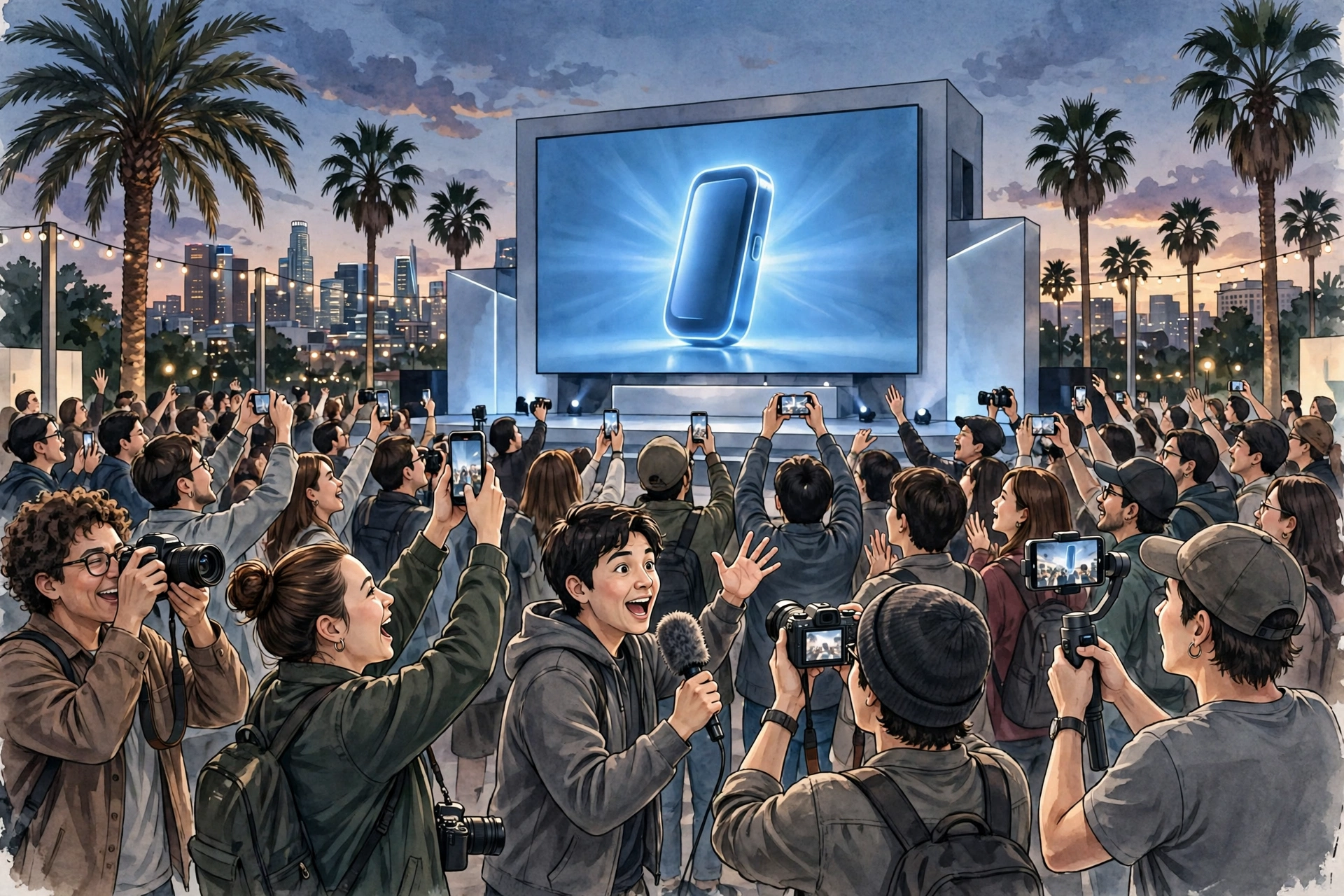
Wednesday’s “Pro and Tell” event in Los Angeles is where the redesign is expected. Reporting from The Apple Post, based on Bloomberg’s Mark Gurman, says the new MacBook Pro models to be unveiled there will feature touch-enabled OLED displays — the first time Apple has brought direct touch input to a MacBook screen — will be lighter than current models, and will replace the display notch with a Dynamic Island-style cutout, while using M5 Pro and M5 Max chips rather than the M6 generation (The Apple Post). PYMNTS likewise reports that Wednesday’s event is set to feature Apple’s first touch-screen MacBook Pro (PYMNTS).
That distinction is worth holding onto until Apple speaks: the M6 MacBook Pro and iMac are confirmed products with confirmed prices and dates; the touchscreen OLED MacBook Pro is, as of this writing, a well-sourced expectation. If it lands, it reverses one of Apple’s longest-held design positions. If it slips, Wednesday becomes a hands-on event for the machines Apple has already named.
The bottom line: Apple’s Tuesday announcements are a silicon story — M6 brings a faster GPU, a much faster Neural Engine, Wi-Fi 7 and a 24-hour battery claim to the base MacBook Pro at $1,999, and gives the iMac its biggest speed jump in two generations without raising its $1,499 price. The design story is scheduled for Wednesday. Pre-orders for everything confirmed so far open today, October 28, and the first units reach buyers on November 6.