8th Pay Commission Consultations Continue: 1 January 2026 Effective Date Still Under Discussion, No Final Decision Yet
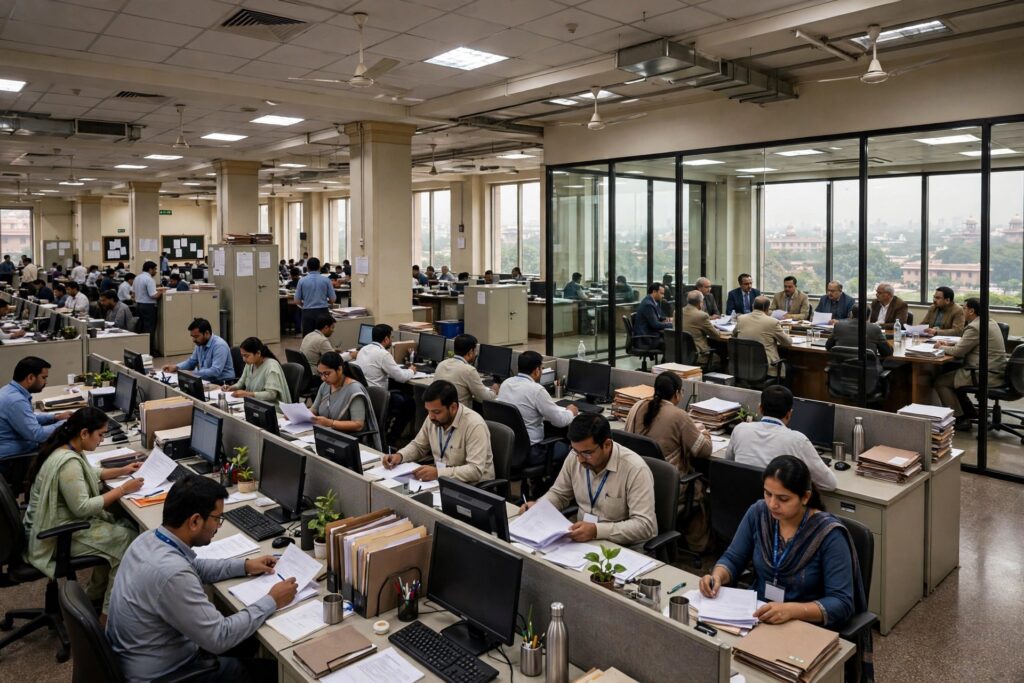
The 8th Pay Commission is still consulting employees and pensioners. 1 January 2026 is the date under discussion as a possible effective date — not a confirmed decision — with a report expected around May 2027.
Highlights
- The 8th Central Pay Commission is still in its consultation phase — no final pay, pension or fitment-factor decision has been announced.
- 1 January 2026 is the date under discussion as the possible effective date — it is NOT a confirmed, notified decision, and revised pay would only follow a report, Cabinet approval and an implementation order.
- Recent rounds were held in Bengaluru on 8 October 2026 and in Mumbai on 23 October 2026, with a fresh railway-union representation reported on 1 November 2026.
- The commission’s 18-month mandate points to a report by around May 2027, so actual revised pay could arrive well after the date under discussion — with arrears a possibility only if that date is ultimately retained.
For more than one crore central government employees and pensioners, the question hanging over the 8th Pay Commission is no longer whether a revision is coming — it is when, and from which date it will count. As of 2 November 2026, the honest answer is that the process is still in motion: consultations are continuing, demands are being tabled, and no final recommendation has been published.
The commission was constituted on 3 November 2025 as a three-member panel headed by Justice Ranjana Prakash Desai, and it has 18 months from its formation to submit its final report to the central government, according to Times Now (29 October 2026). On that timeline, the report is expected around May 2027 — which is why the gap between a possible effective date and money in hand matters so much to employees watching the process.
1 January 2026: under discussion, not decided
The date most often mentioned in reporting is 1 January 2026. ABP Live reported on 4 October 2026 that, according to the government, the 8th Pay Commission “may be effective from January 1, 2026”, while stressing that this does not mean employees will start receiving revised salaries from that date itself, as reported by ABP Live (4 October 2026). The same report notes the commission is currently holding consultations with employees, pensioners and other stakeholders.
That distinction — effective date versus payment date — is the single most misunderstood part of this story. If a later implementation order ultimately gives the recommendations effect from 1 January 2026, the difference between the old and revised pay for the intervening months could be paid as arrears. If that date is not retained, there is no such arrears promise. Until the commission reports and the government decides, 1 January 2026 should be read as the date under discussion, not as a settled fact. Readers should treat every salary calculator circulating online with the same caution: none of those figures is official until the commission itself recommends a number and the Cabinet approves it.
Where consultations stand now
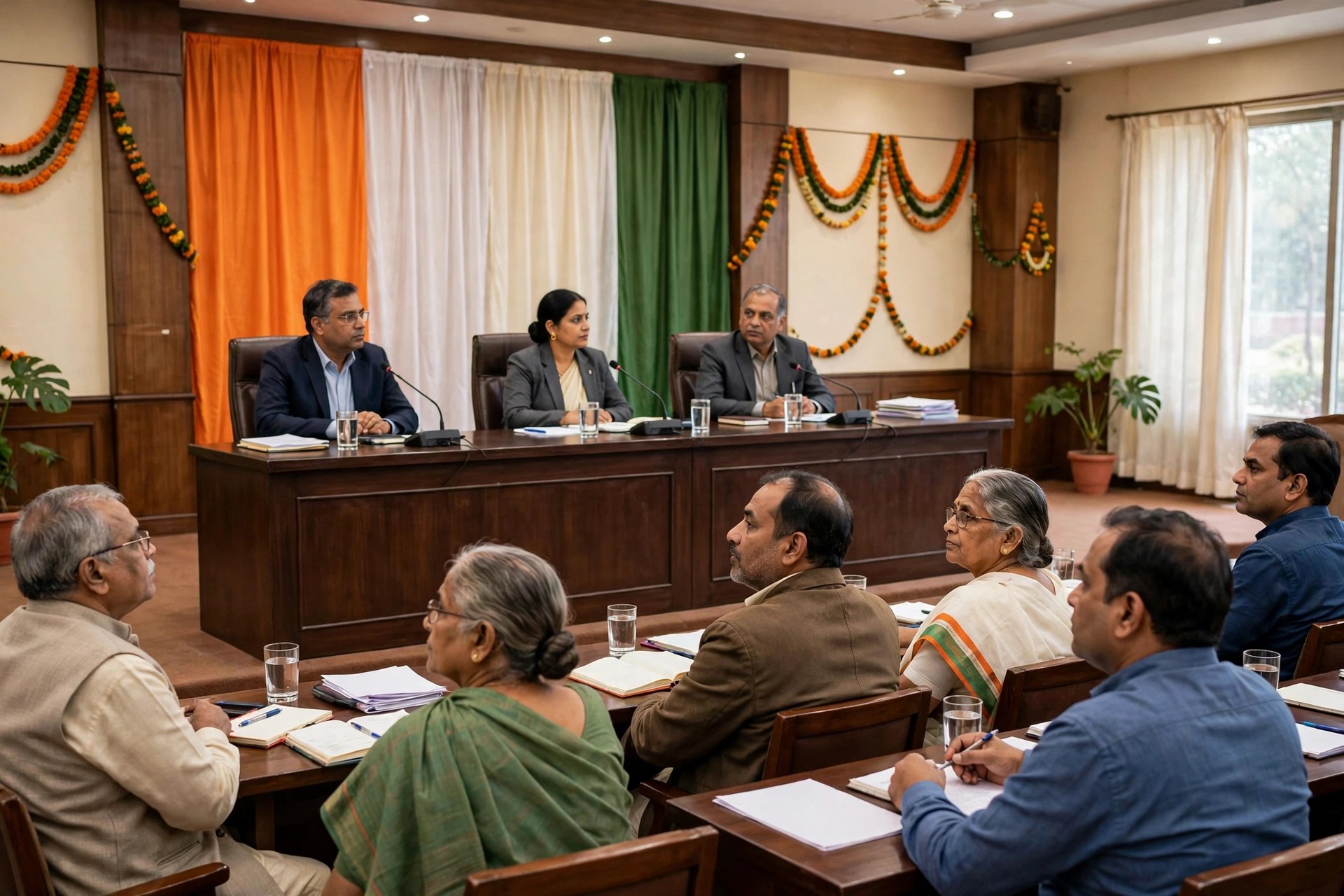
The consultation trail in recent weeks runs through several cities. Times Now reports that the panel recently held meetings in Bengaluru on 8 October and Mumbai on 23 October, as part of a process covering states and union territories including Delhi, West Bengal, Ladakh and Uttar Pradesh, according to Times Now (29 October 2026). Asianet Newsable’s 1 November 2026 report likewise describes the Mumbai meeting as recently concluded, with employee representatives and commission officials in attendance, as reported by Asianet Newsable (1 November 2026). The pattern here matters: like other major policy exercises in India — for example the ongoing consultation on a frontier AI law, covered in our report on India’s frontier AI law consultation — the commission is gathering written memoranda and hearing staff bodies city by city before it drafts anything.
What unions are actually asking for
The demands now on the table are ambitious, and they are demands — not decisions. The National Federation of Indian Railwaymen has sought a minimum pay of ₹69,000 per employee in its representation to the commission, pitching a fitment factor of 3.833 to “ensure an adequate and meaningful revision of pay”, according to The Economic Times / ETHRWorld (1 November 2026). According to an NFIR statement cited in that report, a delegation led by president Guman Singh and general secretary M. Raghavaiah presented its demands before the commission in New Delhi on Friday (30 October 2026). The federation also sought doubling the annual increment from 3% to 6%, with a minimum financial benefit of ₹10,000, and at least five promotions during an employee’s service.
Other staff bodies have pushed in the same direction on increments. Asianet Newsable reported on 1 November 2026 that the National Council–Joint Consultative Machinery (NC-JCM) supported a 6% annual increment in its memorandum, as did AIDEF and FNPO, while the All India NPS Employees Federation demanded 7%, as reported by Asianet Newsable (1 November 2026). The argument, as unions put it, is that a higher annual increment compounds over a decade and reduces the pressure to wait ten years for the next big revision.
Dearness allowance: the other live argument
Alongside basic pay, dearness allowance (DA) is the second front. Times Now reported on 29 October 2026 that employee and pensioner organisations want DA revised every three months instead of twice a year, merged with basic pay once it crosses 25%, and made tax-free, according to Times Now (29 October 2026). The Bharat Pensioners Samaj has sought quarterly revisions to DA and dearness relief, while the Federation of National Postal Organisations has called for merging DA with basic pay and DR with basic pension once the rate exceeds 25%.
Times Now is explicit on the status of these ideas, and the wording is worth quoting in full: “However, none of the proposals has been approved. Their implementation will depend on the commission’s recommendations and the central government’s final decision.” That sentence is the correct lens for the whole 8th Pay Commission debate right now. Separately, and not to be confused with the commission’s work, the Union Cabinet did approve a 3% DA/DR increase on 28 October 2026, taking the rate to 63% from 60%, effective from 1 July 2026, as reported by The Sunday Guardian (31 October 2026). That is a routine DA revision under the existing system — not a commission recommendation.
What happens next — and what to watch
Three milestones will decide this story. First, the commission completes one year since its constitution on 3 November 2026, with no further meeting schedule publicly announced after Mumbai, according to Asianet Newsable (1 November 2026). Second, the report itself, due within the 18-month mandate around May 2027. Third, the government’s decision on that report — which recommendations to accept, from what date, and with what arrears treatment. Central policy decisions in the same period, such as India’s extension of duty-free cotton imports to December, show how a Cabinet decision can move quickly once taken; the pay commission route is slower by design, because it must weigh the fiscal cost across more than a crore of beneficiaries.
The useful way to follow this story is therefore to track process, not projections. Watch for the commission’s next consultation schedule, for any interim statement on the effective date, and — most importantly — for the report itself. Until then, any article promising an exact new salary, a fixed fitment factor, or a confirmed arrears payout is getting ahead of the only bodies that can decide those things: the commission and the government.
Note: This article reports demands, consultation status and dates under discussion as attributed to the sources cited. No pay figure, fitment factor or effective date in this article is a confirmed government decision. Public reaction: no verified, attributable public-reaction material was found for this story at the time of writing, so no reactions section has been included rather than inventing one.