

Highlights
- Petrol rose by Rs1.54 to Rs379.25 per litre and high-speed diesel by Rs2.16 to Rs395.82 per litre, effective Tuesday, October 27
- The government continues to levy Rs114 per litre in taxes and duties on petrol and Rs100 per litre on diesel
- A revived austerity drive requires commercial markets to close by 9:00 PM and cuts fuel allocations for official government vehicles by 50% for an initial three months
- High-speed diesel has come down from a record peak of Rs520.35 on April 3, after starting its rise from Rs281 per litre following the late-February escalation
The new pump prices: what changed on October 27
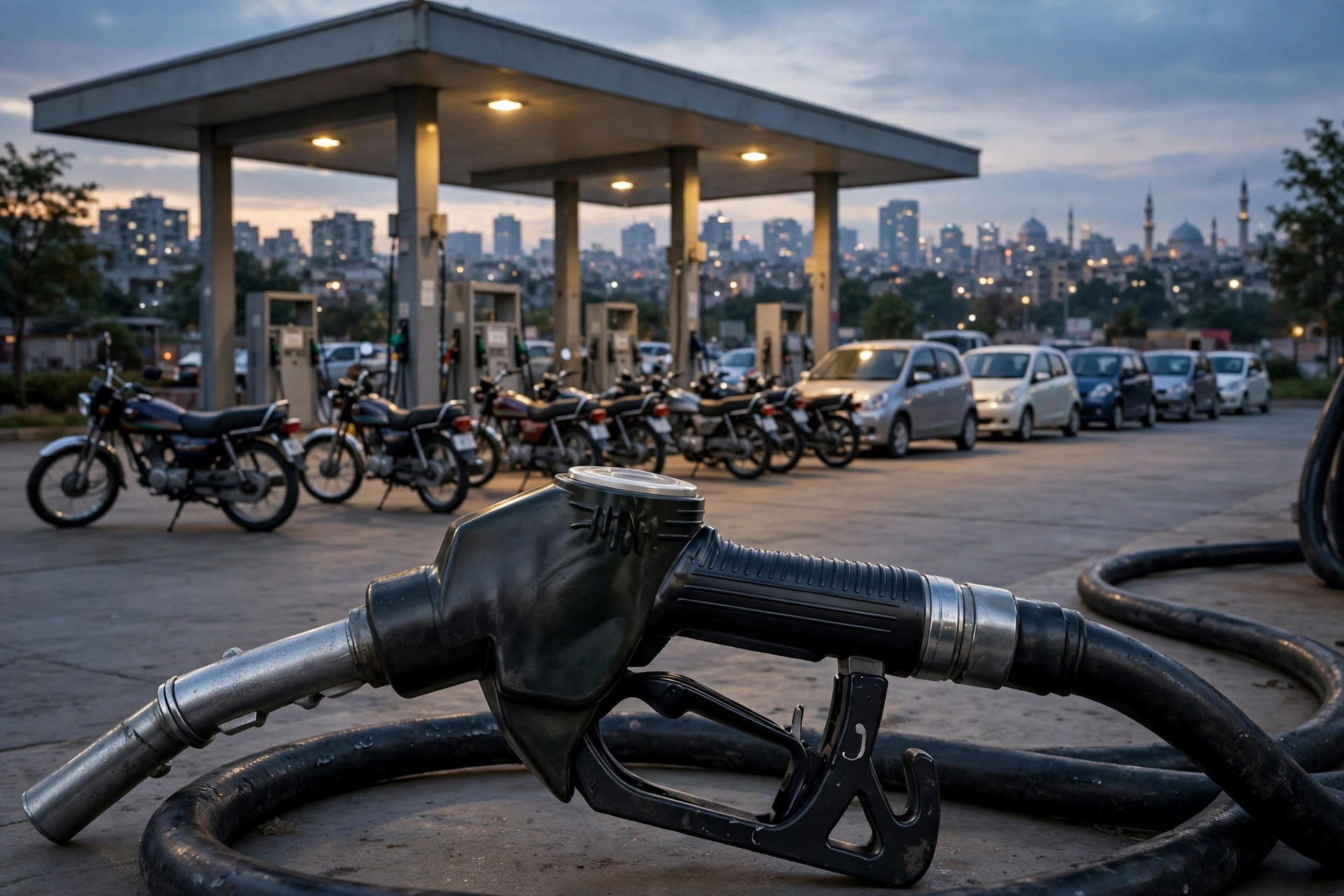
The government on Monday increased the price of petrol by Rs1.54 per litre and that of high-speed diesel (HSD) by Rs2.16 (Dawn). Following the revision, petrol will retail at Rs379.25 per litre, while HSD will cost Rs395.82 per litre (Dawn). According to the Petroleum Division’s notification, the new prices are applicable for Oct 27 (Tuesday) (Dawn).
The same figures were carried in ANI’s reporting of Dawn’s story: following the latest revision, petrol will now be sold at PKR 379.25 per litre, while high-speed diesel will cost consumers PKR 395.82 per litre, and the newly adjusted prices will come into effect from Tuesday, October 27, according to an official notification issued by the Petroleum Division cited by Dawn (The Tribune / ANI).
Business Recorder’s account of the same notification gives the starting point for both fuels. Following the revision, the price of HSD was increased from Rs393.66 to Rs395.82 per litre, while petrol price went up from Rs377.71 to Rs379.25 per litre, and the revised prices will be effective for Tuesday, October 27, 2026 (Business Recorder). According to a press release issued by the Petroleum Division, the Oil and Gas Regulatory Authority (OGRA) revised the ex-depot prices of petroleum products under the federal government’s petroleum pricing mechanism (Business Recorder). OGRA said the change in prices was necessitated by global developments, including changes in Platts rates, premiums and incidentals (Business Recorder).
This was the second adjustment in a few days. The government on Friday increased the price of high-speed diesel by Rs1.91 per litre while keeping petrol price unchanged (Business Recorder). Under the current system, that frequency is by design: on July 17, Petroleum Minister Ali Pervaiz Malik announced that fuel prices would now be fixed on a daily basis due to fluctuations in international market prices following renewed hostilities between Iran and the US (Dawn).
The tax built into every litre: Rs114 on petrol, Rs100 on diesel
The pump price is not only the cost of fuel. The government continues to levy Rs114 per litre in taxes and duties on petrol and Rs100 per litre on diesel (Dawn). ANI’s reporting of the Dawn story puts it the same way: the administration continues to levy heavy taxes on fuel, maintaining duties of PKR 114 per litre on petrol and PKR 100 per litre on diesel (The Tribune / ANI).
Dawn’s reporting also sets out who uses which fuel, and why both prices matter beyond the pump. Petrol is mainly used in private transport, small vehicles, rickshaws and two-wheelers, and changes in its price affect the middle and lower-middle classes (Dawn). Changes in diesel prices also impact the public at large, as it is mainly used in the heavy transport sector, power plants and large generators (Dawn). Petrol and HSD are the major revenue earners, with monthly sales of about 700,000 to 800,000 tonnes, compared to just 10,000 tonnes of monthly demand for kerosene (Dawn).
The wider energy backdrop is the same one moving global markets — see our earlier explainer on gold and silver prices falling ahead of the Fed meeting as oil held near $115. Business Recorder noted the global picture on the day of the announcement: oil prices fell $2 a barrel on Monday amid hopes of easing hostilities between the United States and Iran, but persistent attacks on key producer Saudi Arabia kept investors wary and prices near six-month highs, with Brent crude futures down $2.03, or 1.7%, at $114.70 (Business Recorder).
The austerity drive: markets by 9pm, official fuel halved for three months
Alongside the price revision, the government has reintroduced a raft of austerity measures in response to rising fuel prices amid the ongoing Middle East conflict, under which markets are required to close by 9pm, and fuel allocations for official vehicles have been cut by 50 per cent for three months (Dawn).
ANI’s reporting of Dawn’s story describes the same package as revived conservation directives: commercial markets across the country are mandated to shut down operations by 9:00 PM, and the administration has slashed fuel allocations for official government vehicles by 50 per cent for an initial period of three months in a bid to rein in public spending and reduce energy consumption (The Tribune / ANI). The measures were reintroduced, in that reporting, in response to persistent turbulence in global energy markets and high domestic fuel prices fueled by the Middle East conflict (The Tribune / ANI).
Dawn also recorded the steps that preceded this package. On Sept 13, Prime Minister Shehbaz Sharif announced a “relief scheme” for users of motorcycles, autos and vehicles of up to 800cc to “alleviate the burden” of rising global oil prices (Dawn). Prior to the daily system, the government had been announcing weekly revisions to fuel prices since early March, alongside measures for the conservation of fuel amid possible oil supply disruptions due to the ongoing conflict in the Middle East, and the federal government in April also announced targeted relief measures to provide subsidised fuel (Dawn).
On the supply question, Dawn reported that on Friday the Pakistan Petroleum Dealers Association had urged consumers not to resort to panic buying, as excessive purchases could create market distortions (Dawn). The same day, senators raised concerns over fuel supply even after Minister of State for Finance and Revenue Bilal Azhar Kayani said that there were no supply issues (Dawn). PPP’s Sherry Rehman questioned petrol availability for December and Opposition Leader Raja Nasir Abbas warned of a bleak situation amid heightening Middle East tensions (Dawn).
The longer arc: from Rs281 to a record Rs520.35, and back down
Tuesday’s increase is small next to the swings that preceded it, and Dawn’s history in the same report is the clearest way to see that. The price of HSD has come down from a peak of Rs520.35 recorded on April 3, and its price had started rising from Rs281 per litre after the US-Iran war broke out on Feb 28 (Dawn). The petrol price had peaked at Rs458.41 on April 3 after beginning its upward trajectory from Rs266 in the first week of March (Dawn).
ANI’s version of the Dawn reporting frames the diesel move in the same terms: HSD, which had surged from PKR 281 per litre following the escalation of regional hostilities in late February, had climbed to a record peak of PKR 520.35 on April 3 before seeing recent downward adjustments (The Tribune / ANI).
Read together, those figures explain the shape of the government’s response. Pump prices are well below their April peaks, but they remain far above where they stood before the late-February escalation — and the state is pairing a daily pricing mechanism, which passes global moves through quickly in both directions, with conservation measures aimed at consumption itself: earlier market closing and a halved fuel allocation for official vehicles for the next three months.
What to watch next
First, the daily mechanism means this story now moves daily. Since July 17, prices have been fixed on a daily basis, with OGRA deciding fuel prices on a daily basis based on international market trends, as the petroleum minister stated (Dawn). A single day’s Rs1.54 or Rs2.16 move is therefore less informative than the direction over a week — and Friday’s separate Rs1.91 diesel increase shows how quickly consecutive adjustments can add up (Business Recorder).
Second, the austerity clock is three months, and it is specific. Markets closing by 9pm and a 50% cut in fuel allocations for official vehicles are both measurable commitments with a stated initial period of three months (Dawn). Whether they are extended, tightened or allowed to lapse will be visible in the same kind of notification that announced them.
Third, the duty figures are the part of the price the government controls directly. At Rs114 per litre on petrol and Rs100 per litre on diesel (Dawn), taxes and duties make up a large, stated share of what is paid at the pump, separate from the Platts-linked ex-depot price that OGRA revises. Any future change to those two numbers would be a policy decision, distinct from a global price move — and it would show up in the Petroleum Division notification itself.