

Highlights
- Moonshot AI apologised on Monday for rate limiting and “unnecessary quota consumption” following the launch of its Kimi K3.1 Pro flagship model
- Every subscriber, on every tier, gets 25% of their monthly quota reset — which Moonshot says equals one week’s usage; those who had used less than 25% are reset to zero
- In its own statement, the company admitted: “the problem was ours, and we should have fixed it sooner”
- The model, released only on October 24, has also been re-tuned to make fewer unnecessary sub-agent calls and produce shorter outputs, so the same quota completes more real tasks
What went wrong in 48 hours
Moonshot AI, the Beijing-based startup behind the Kimi assistant, apologised on Monday for rate limiting and unnecessary quota consumption after its Kimi K3.1 Pro launch (Reuters). Some members ran into rate limits while using the new model, while others saw their paid quotas being consumed unnecessarily — and the company attributed the cause to its own configuration problems (BigGo Finance).
The apology, issued early on October 26 — just two days after the model’s official release — came with an admission that most AI companies would phrase far more carefully: “the problem was ours, and we should have fixed it sooner” (BigGo Finance).
The compensation covers all active subscription members regardless of tier: 25% of each account’s monthly total quota is reset, which the company says is equivalent to one week’s usage, while members whose usage was already below a quarter of their monthly total are reset to zero (Reuters; BigGo Finance). The fix is a quota reset, not a cash refund — the adjusted usage bars were to be displayed before the end of October 25 US Pacific Time, around the afternoon of October 26 in Beijing (BigGo Finance).
The technical root: an agent that spent its user’s money on itself
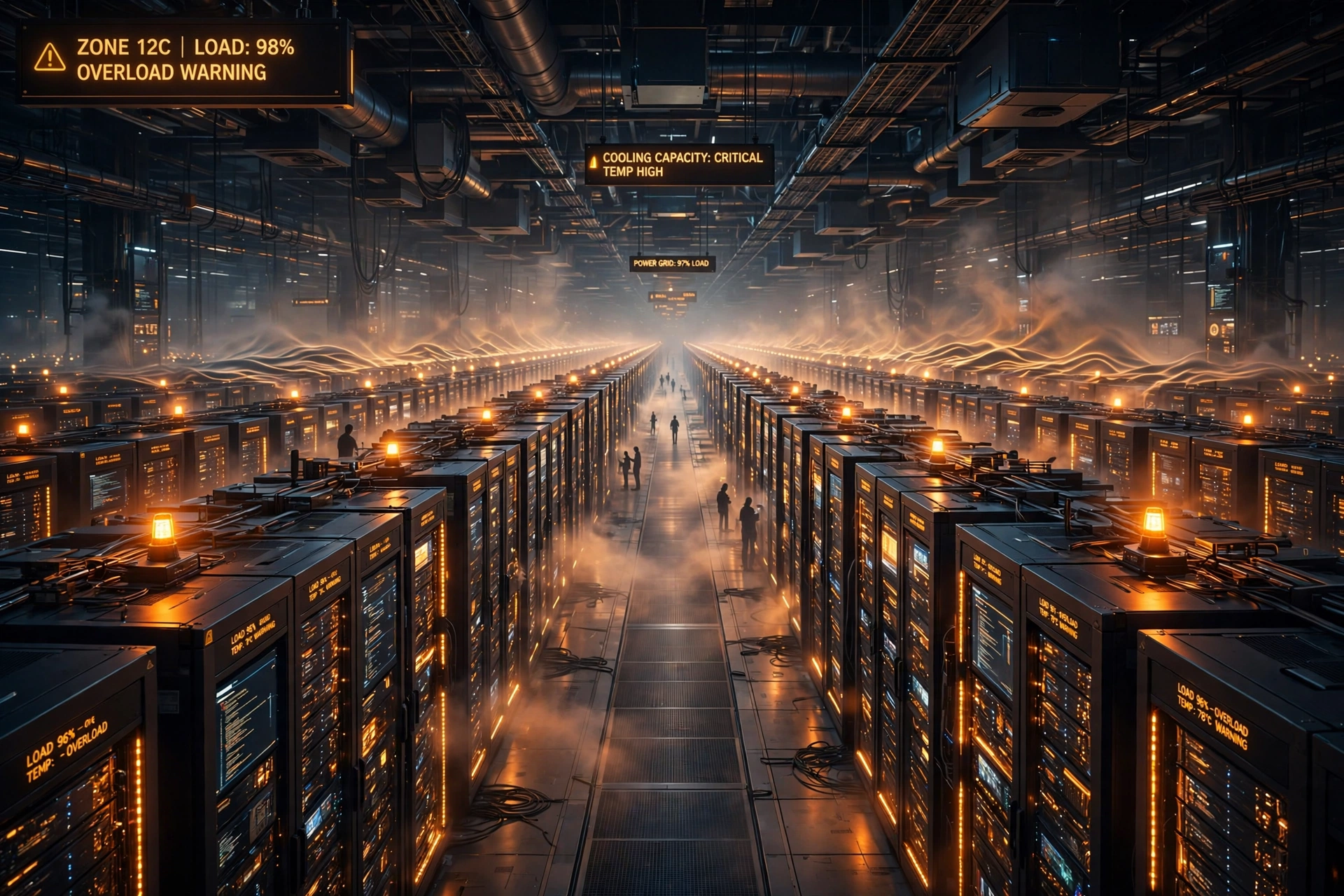
Beyond compensation, Moonshot said it had adjusted parameters to reduce unnecessary subagent calls and output length — the delegation of tasks among AI agents, and the total number of tokens generated in response to a prompt (Reuters). The statement points to the technical root of the problem: the extra computing overhead from multi-layer agent orchestration may be the source of the abnormal quota consumption — in plain terms, the model was spending subscribers’ allowances on its own internal machinery, and Moonshot’s goal now is to let the same quota complete more actual tasks (BigGo Finance).
This is not the company’s first brush with capacity trouble. Moonshot previously had issues with computing capacity after K3 itself was launched, and Chinese AI labs more broadly are suffering computing shortages following US chip export controls (Reuters).
The model that caused the meltdown is genuinely formidable
The awkward part for Moonshot is that K3.1 Pro, by the numbers, deserved its launch-day crowds. Released on October 24 as the first model in the K3.1 series and the company’s most capable flagship to date, it is a mixture-of-experts model with 2.8 trillion total parameters — 104 billion of them activated per request — and support for a 1-million-token context window (BigGo Finance). It is a post-trained development of Kimi K3, released in July, with significantly more compute invested in the post-training phase (BigGo Finance).
It also arrived cheaper: API pricing is $2 per million input tokens and $10 per million output tokens, with cached input at $0.20 per million — about one-third lower than Kimi K3’s $3 and $15 (BigGo Finance). On the independent Artificial Analysis Intelligence Index the model scored 55, ranking fourth among 215 models, behind Claude Opus 5.5’s 58 — while most of its other headline scores, such as a self-reported 65.7% on Terminal-Bench 4.0 against Opus 5.5’s 66.4%, are the company’s own numbers rather than independent measurements (BigGo Finance).
And the story is not finished. Moonshot plans to open-source K3.1 Pro, with full model weights to be released by November 4 — at which point third-party evaluators expect it to become the strongest open-source model on their intelligence index (BigGo Finance).

What a 48-hour billing fire says about the AI race now
First, the apology matters because of who it was owed to. Free users tolerate rate limits; paying subscribers, metered by quota, experience them as money taken. Moonshot’s compensation — a flat quarter of everyone’s monthly quota, across every tier, within two days — is an unusually fast and unusually blanket response, and the plainness of “the problem was ours” suggests the company understands that in a market of near-identical models, trust in the billing meter is a feature (Reuters; BigGo Finance).
Second, the bug is a sign of where the industry’s costs now hide. The quota drain apparently came from agent orchestration — the model delegating work to sub-agents and generating long outputs — meaning the smarter these assistants get at working autonomously, the more compute they can burn invisibly on a single user request (Reuters; BigGo Finance). Metering that invisible work fairly is becoming one of the hardest product problems in AI, and every major lab will face its own version of this week.
Third, capacity is the quiet ceiling on China’s AI ambitions. A flagship from one of the country’s best-funded labs stumbled on the same constraint after its previous launch, against a backdrop of computing shortages driven by US chip export controls (Reuters). K3.1 Pro’s benchmark scores say Chinese models can match the frontier; its launch week says matching the frontier’s infrastructure is the harder race. The November 4 open-weights release will be the next test — thousands of outside deployments, on other people’s servers, where Moonshot’s quota problems at least cannot follow.