


Highlights
- Brazil’s electoral court declared Lula the winner of Sunday’s presidential runoff with 51.76% of the vote to Flávio Bolsonaro’s 48.24% — a margin of about 4.4 million votes
- It is the first time since the return of direct presidential elections in 1989 that a candidate has won the presidency after finishing second in the first round
- Bolsonaro trailed all night after a chaotic election day in which a Supreme Court justice extended voting by two hours; he now says: “We will take legal action. We will ask for this election to be annulled”
- Lula’s win halts a run of right-wing victories across Latin America — and an ETF tracking Brazilian stocks fell 13% in Japan as investors who had bet on Bolsonaro absorbed the result
A reversal 37 years in the making
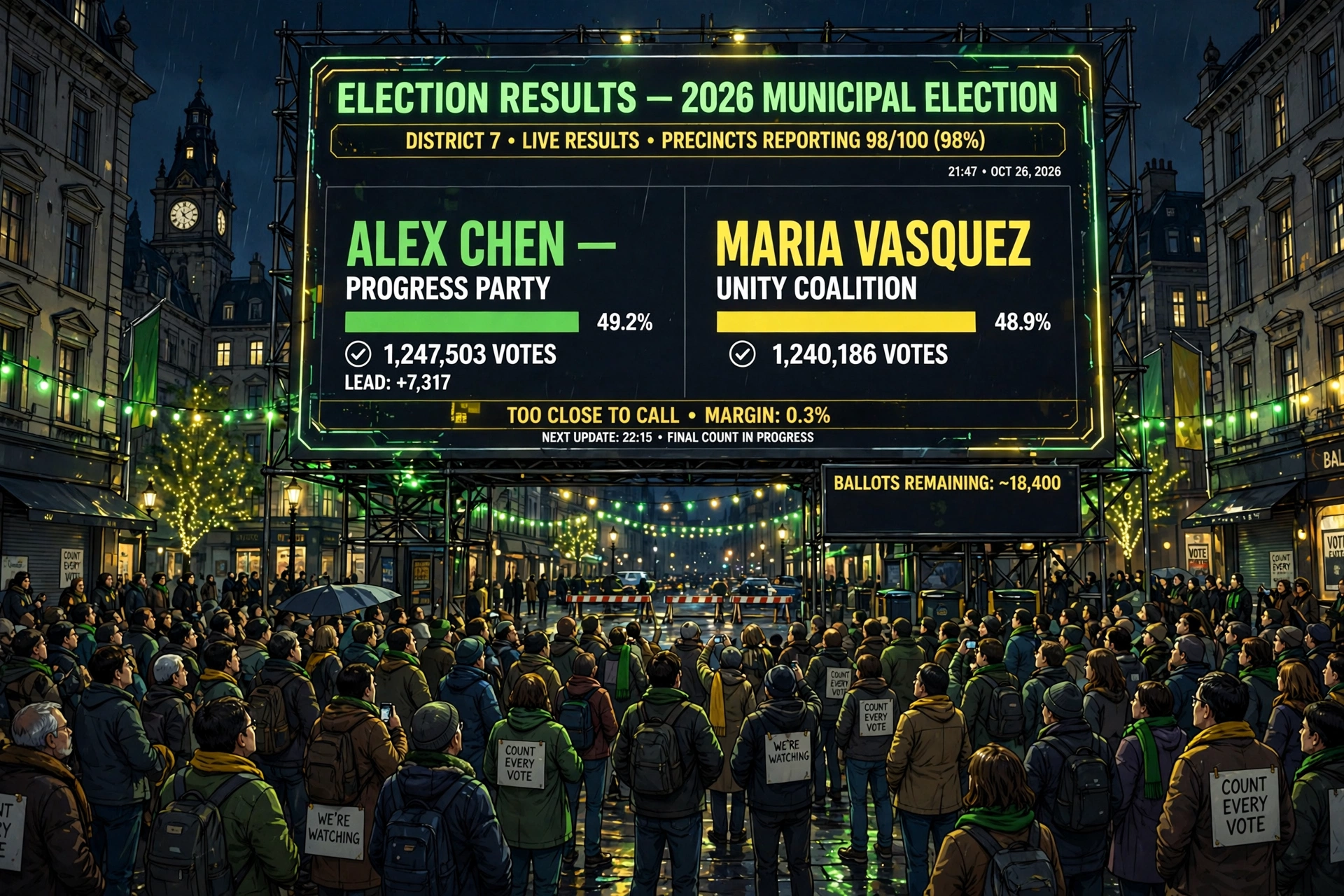
President Luiz Inácio Lula da Silva came from behind to win Brazil’s runoff election on Sunday, halting a right-wing wave sweeping Latin America, as the electoral court declared him the winner with 51.76% of the vote to Flávio Bolsonaro’s 48.24% (Business Standard). Bolsonaro trailed Lula by about 4.4 million votes (CNN).
The scale of the turnaround is best measured against the first round on October 4, which Bolsonaro — the Rio de Janeiro senator and eldest son of former president Jair Bolsonaro — won by 2.2 million votes (CNN). Since direct presidential elections resumed in 1989, every runoff had previously been won by the candidate who finished first in the opening round; no one who came second had ever pulled off a reversal (Business Standard). The 80-year-old Lula is now the first — and his reelection to an unprecedented fourth term extends a political career spanning more than four decades (Business Standard).
What saved him, by most accounts, was his oldest constituency: voters from Lula’s heartland in Brazil’s poorest regions rallied to the leftist leader who has been the face of the region’s resistance to Trumpism (Business Standard). “The Northeast is going to save this country again,” Antonio Avelino, 73, predicted a week before the election as he drove his taxi through São Paulo’s streets (Business Standard).
The election day that ended in a courtroom threat
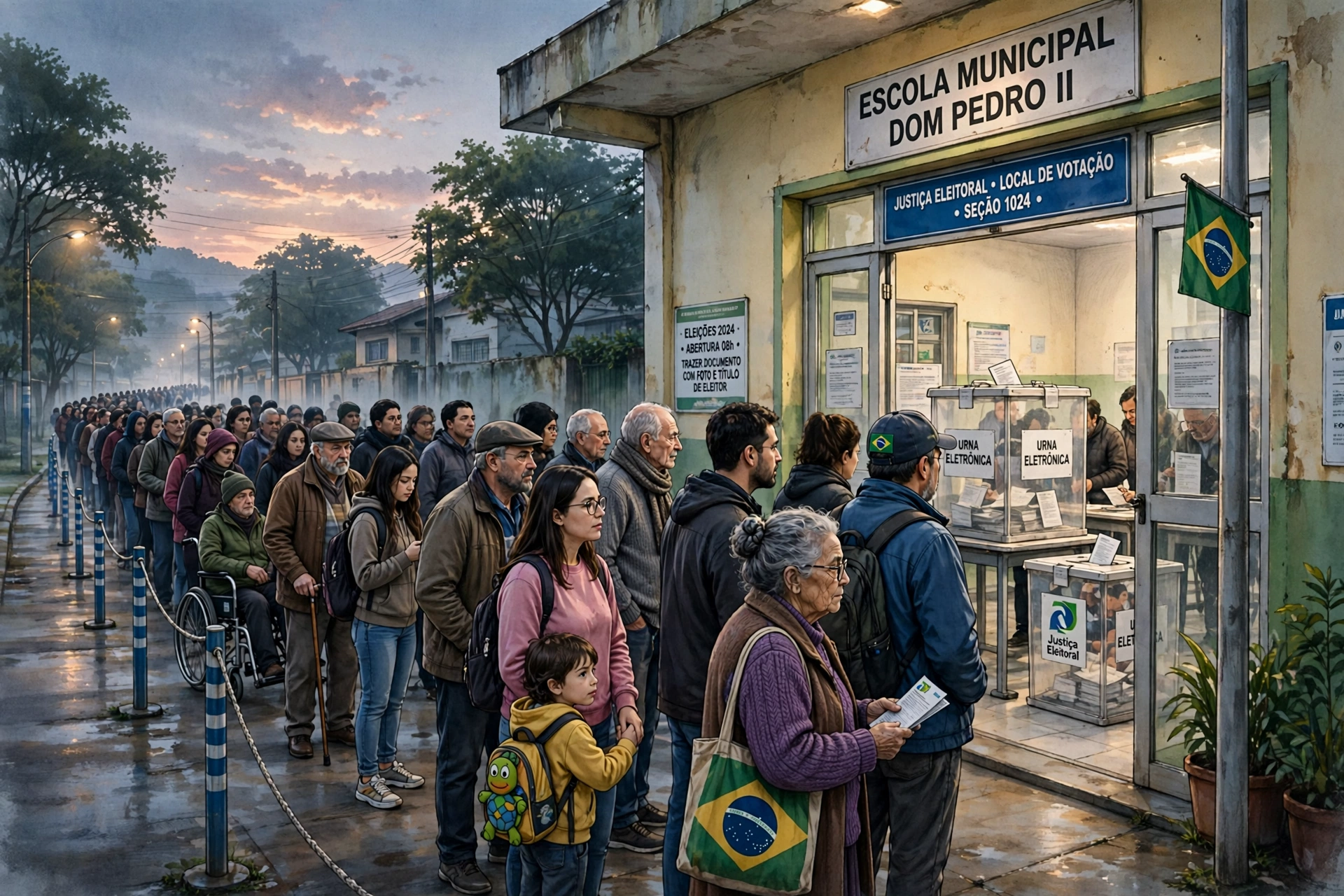
The result came after a messy election day marked by allegations of voter suppression and a last-minute extension of voting hours (Business Standard). Supreme Court Justice Cristiano Zanin granted a request from Lula’s campaign for an extension, citing “incidents” affecting buses that provide transportation to polling venues in several states — while Bolsonaro’s campaign had also requested an extension in some areas, citing difficulties voters faced reaching polling stations because of heavy rain (CNN). The order came around 5 p.m. in Brasilia, just as polls were scheduled to close, and many stations had already shut down (CNN).
That extension is now the centre of Bolsonaro’s refusal to concede. “It is impossible to recognize the election result given how these events unfolded,” he told supporters in Brasilia after Lula’s victory was declared, adding: “We will take legal action. We will ask for this election to be annulled” (CNN). In separate brief remarks, he said: “There’s a lot that needs to be cleared up before Brazil simply accepts this foul play” (USA Today). His defeat is also a family one: Flávio has failed to accomplish what his father — imprisoned former president Jair Bolsonaro, who is serving a 27-year sentence under house arrest after a court convicted him of an attempted coup — also could not do in 2022: defeat Lula at the ballot box (CNN; USA Today).
Lula’s victory speech aimed at two men
Lula threw jabs at both Trump and Flávio Bolsonaro in a triumphant victory speech on October 25: “People went to vote because we convinced them it was important to preserve democracy,” he said. “This country doesn’t accept being anybody’s colony” (USA Today). He also promised a changed government: “I can assure you that we are going to change the way we govern this country. We are going to give the people a greater role in our decisions” — and he thanked the Brazilian people for their “generosity,” especially the country’s youth who “took to the streets to defend democracy” (CNN).
His supporters celebrated in the streets: in Rio de Janeiro they were seen hugging, beeping their car horns and raising the “L” sign, while in Belo Horizonte, capital of the key swing state of Minas Gerais, supporters chanted and sang after the victory (CNN).
The Washington dimension hung over the whole race. US President Donald Trump said before polls closed that he was “monitoring” Brazil’s runoff; he declined to endorse either candidate, though he had previously praised Flávio’s first-round performance and described the election as “very important” (CNN). Lula’s triumph interrupts a string of right-wing victories in Latin America — in Bolivia, Chile, Costa Rica, Colombia, Ecuador, Honduras and Peru — that had given Trump ideological allies across the region (USA Today). “It shows that the left is not like a vanquished force. It’s on the wrong end of the pendulum swing, but it’s still a significant force in many of these countries,” said Christopher Hernandez-Roy of the Center for Strategic and International Studies in Washington (USA Today).
How the markets and the analysts took it
Investors had been banking on Bolsonaro to fix Brazil’s fiscal accounts, and for them Lula’s win is a blow: traders had piled into the country’s markets hoping he would be more committed to spending restraint than Lula, and an ETF tracking Brazilian stocks tanked 13% in Japan (Business Standard). At home, Lula faces rising deficits and debt that have kept interest rates high and left Brazilian households with personal loan defaults at their highest levels in two decades (Business Standard).
Political analyst Creomar de Souza, founder of Brasilia-based Dharma Political Risk and Strategy, warned that the mandate is thinner than the celebration suggests: “He may think he has been given a free pass, but he was reelected in an environment of institutional fragility. He will need to be able to build a coalition, even as his victory sends a strong message to the radical right, which will have to rethink how it operates” (Business Standard).
What Brazil’s closest modern election actually decided
First, the comeback rewrites what is possible in Brazilian runoffs. For 37 years, finishing second in the first round was a death sentence; the first-round leader always closed the deal. Lula reversed a 2.2-million-vote deficit in three weeks by doing the unglamorous work of runoff politics — easing pressure on household finances with measures including higher family benefits and a consumer-debt refinancing plan, then spending the final 15 days chasing first-round abstainers and undecided voters (CNN; Business Standard). Every future Brazilian campaign will now study this race as proof that the runoff is a separate election.
Second, the legitimacy fight is now the story, and Brazil has been here before. Bolsonaro’s annulment demand rests on a voting extension that his own campaign had also requested in places, ordered by a court following the same procedures available to both sides (CNN). But in a country where the last transfer of power was followed by the January 8, 2023 attacks on government institutions after Jair Bolsonaro’s attempts to overturn his 2022 defeat, a defeated candidate calling the result “foul play” is not a legal footnote — it is the risk the next months will be organised around (CNN).
Third, the hemisphere’s map did not flip — and that changes Washington’s arithmetic. A Bolsonaro victory would have let the White House count ideologically friendly governments in all five of South America’s largest economies; instead, Latin America’s biggest country stays on an independent path under a president who emphasises sovereignty, the Global South and China — Brazil’s largest export market (USA Today; CNN). Lula, who ended his second term in 2010 with an 83% approval rating and was once called “the most popular politician on Earth,” now governs a country split between what one account called unreconcilable ideologies, with approval ratings that hit historic lows during his current tenure (Business Standard). Winning the comeback was the improbable part. Governing what it revealed may be harder.