

Why AI Images Look Wrong: Hands, Text and Other Common Problems Explained
Extra fingers, garbled text, drifting counts and impossible physics are not random bugs — they follow from how diffusion models paint plausibility instead of obeying rules. The causes, and the practical workarounds.
Everyone who generates AI images meets the same moment: the picture looks impressive for half a second, and then your eye catches it — a hand with the wrong number of fingers, a sign written in almost-letters, a cup that merges into the table. These are not random bugs and they are not your fault as a beginner. They follow from how image generators actually work, and once you understand the causes, you can prompt around most of them. This explainer sits inside our pillar guide, AI image generators explained, and it is the troubleshooting companion to our step-by-step guide to creating AI images.
Highlights
- Generators paint plausibility, not truth: a diffusion model builds an image that looks right overall; it does not know anatomy, spelling or physics as rules, so small structured details are where it fails first.
- Hands are the classic failure: they are small, varied, often partly hidden in training photos, and made of many similar repeated parts — exactly the combination a pattern-based system handles worst.
- Text is drawn as texture, not read as language: models learned what lettering looks like before they learned what it says, which is why signs come out garbled — newer tools advertise text handling as a headline improvement for this reason.
- Counting and cause-and-effect are weak spots beyond images too: OpenAI says of its video model Sora that it may struggle to simulate the physics of a complex scene or specific cause and effect — the same underlying limitation shows up in stills.
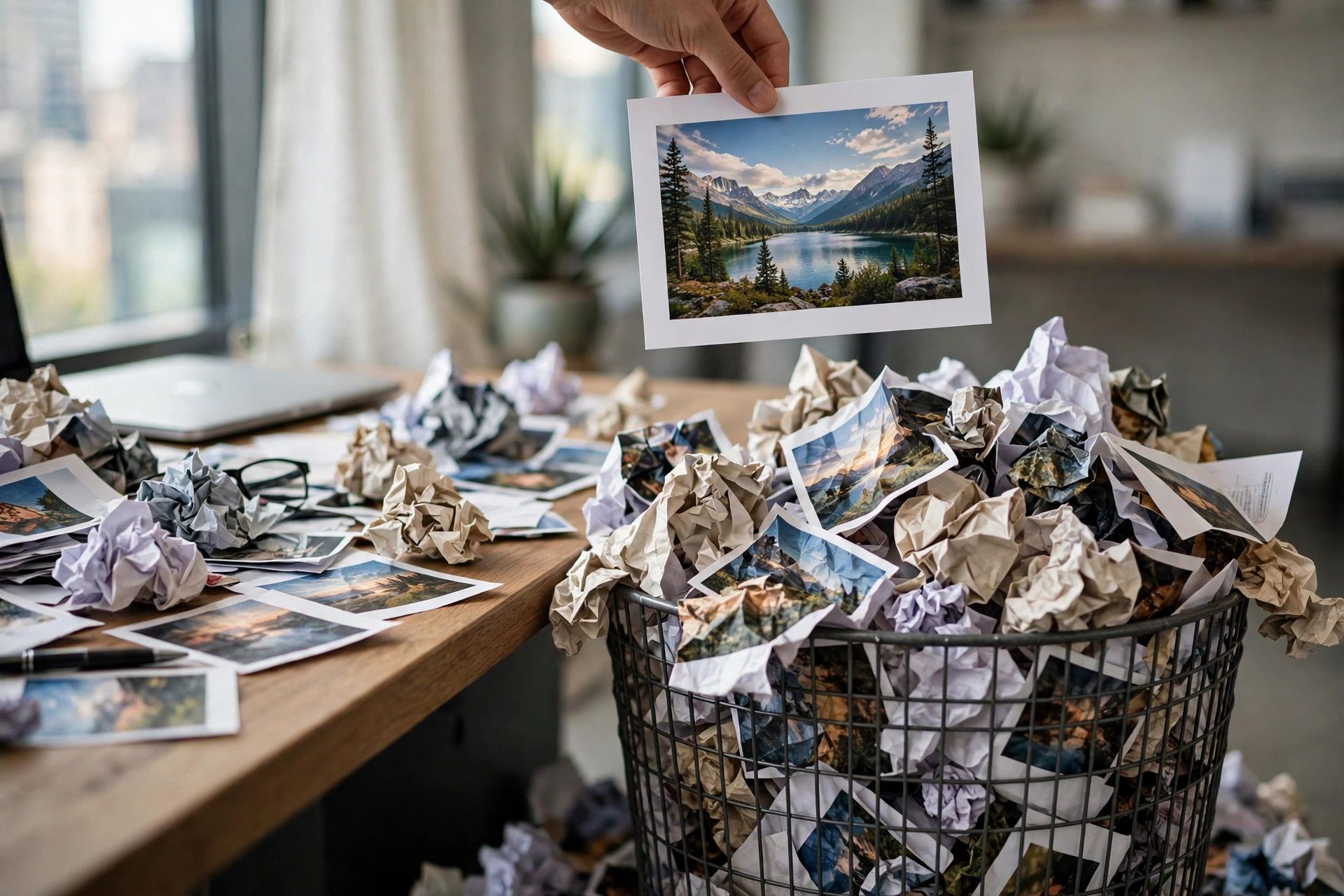
- Most problems have a practical workaround: simplify the scene, hide or reframe hands, add text later in an editor, and regenerate rather than repair.
First, the root cause: the model is guessing what pixels usually look like
An AI image generator does not understand a scene the way you do. As OpenAI explains for its video model Sora — which shares its core approach with modern image models — a diffusion model generates by starting with material that looks like static noise and gradually transforming it by removing noise over many steps, guided by your prompt. At every step the model asks, in effect: given the words and the picture so far, what should this region probably look like? That word “probably” is the whole story of this article. The model has absorbed statistical patterns from enormous numbers of images, so it is superb at overall look — lighting, texture, mood, composition. But it holds no rulebook. It does not know a hand has five fingers; it knows hands are usually drawn as a cluster of finger-like shapes. It does not know how to spell; it knows signs usually carry letter-like marks. When a detail is governed by a rule rather than a look — counting, spelling, anatomy, physics — the guessing shows. Our pillar guide explains this diffusion process in full; here we follow its consequences.
Hands, fingers and faces: why the small repeated parts break
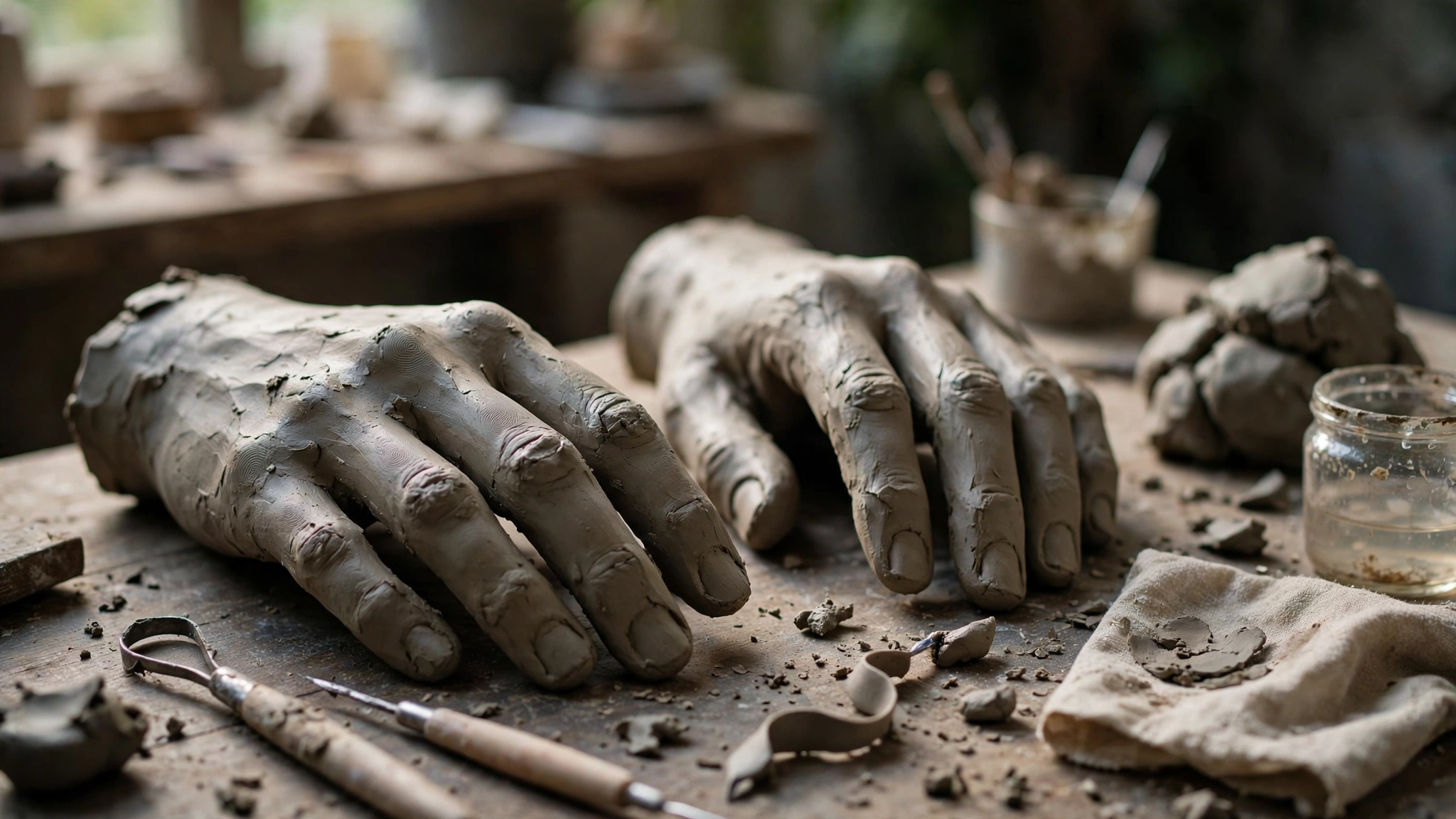
Hands concentrate every difficulty at once. They are small in most photographs, so the model saw them at low detail. They appear in countless poses, so there is no single pattern to learn. They are frequently cropped, holding objects or half-hidden, so training examples often show partial hands. And they are made of repeated similar units — fingers — where the correct count is a rule, not a look. The result is the famous catalogue of errors: six fingers, fused fingers, a thumb on the wrong side, hands melting into whatever they hold. Faces fail more subtly for a related reason: humans are exquisitely tuned to faces, so a slightly asymmetric eye or odd teeth register instantly even when the rest of the image is flawless. The workarounds are practical, not technical. Keep hands out of frame, in pockets, behind objects or cropped at the wrist when the hands are not the subject. Ask for distance shots instead of close-ups when people are incidental. And when a hand really matters, generate several versions and pick the least-wrong — or plan to fix that one region with an editing pass, a technique covered in our prompt checklist’s section on targeted fixes.
Text in images: lettering as decoration instead of language
Ask an older image model for a shop sign and you would get beautiful, confident nonsense: letter-shapes that dissolve into squiggles when you lean in. The cause is the same guessing process. In training images, text usually appears small and incidental, so the model learned the texture of writing — dark marks in rows on a lighter surface — far better than the identity of actual letters. Spelling is a rule system; texture is a look; the model had the look. This is precisely why text handling is now a headline feature when models improve: OpenAI’s help page for ChatGPT Images specifically notes the feature can follow instructions to add text and keep details consistent across edits — an ability worth naming because it used to be unreliable. The working rules remain: keep in-image text short, large and simple; prefer a few words over a sentence; and for anything important — a poster headline, a logo, a book cover — generate the artwork without text and add the words afterwards in any basic editor, where spelling is guaranteed because you typed it.
Counting, symmetry and physics: where rules beat looks
The same rule-versus-look gap explains three more familiar failures. Counting: “three candles on a cake” may produce two or five, because the model renders candle-like shapes in a plausible arrangement rather than enumerating objects. Symmetry and pairs: earrings, wheels, glasses and shoes can come out mismatched, because each is painted locally rather than copied exactly. Physics and cause-and-effect: reflections that do not match the scene, shadows falling the wrong way, objects floating or intersecting. OpenAI states this limitation openly for video — Sora “may struggle to simulate the physics of a complex scene, and may not comprehend specific instances of cause and effect”, giving the example that a cookie might not show a mark after a character takes a bite — and the still-image version of the same weakness is the floating cup and the impossible shadow. Workarounds: ask for fewer objects, name one hero object instead of an arrangement, avoid mirrors and complex interactions, and treat busy group scenes as advanced prompting. Simpler scenes are not a compromise; they are how the tool’s strength — overall look — gets room to work.
How to spot problems before you publish
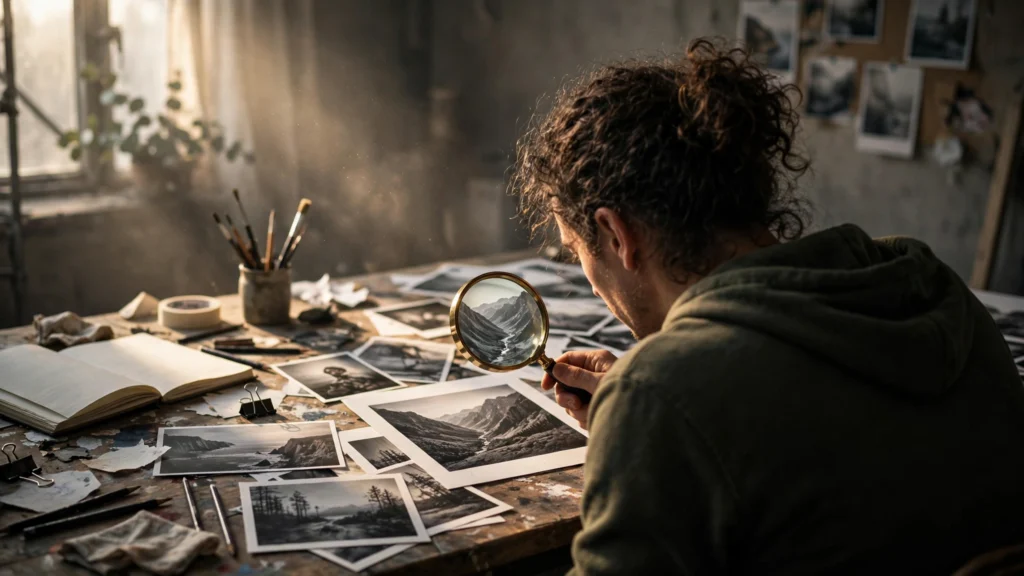
Build a ten-second inspection habit. Zoom to full size — most errors hide at thumbnail scale. Check hands and faces first, then any text, then edges where objects meet: straps that vanish, jewellery that merges with skin, chair legs that multiply. Check reflections and shadows for basic agreement with the scene. If the image is meant to represent something real — a product, a place, a person — hold it to a higher standard or do not use it, because a confident wrong detail misleads in a way a painterly style does not. It also helps to know that identification works the other way: Google DeepMind’s SynthID technology embeds an imperceptible digital watermark into images from Google’s Imagen models precisely so AI-generated images can be identified later. Imperfect output is normal, watermarking is spreading, and honest labelling plus careful checking is the professional posture. When a generation keeps failing on the same detail, change strategy rather than seed: simplify, reframe, or split the job — image from the generator, text and finishing in an editor.
What this means
These failures are often reported as if the technology is broken, but the more useful reading is that they reveal what the technology is. A system that paints by plausibility will be brilliant at everything governed by appearance and unreliable at everything governed by rules — and a remarkable amount of visual life is appearance. That is why the same tool that cannot count three candles can produce a landscape that moves you: landscapes have no rules to break. For users, the practical consequence is a division of labour. Let the generator do what it is structurally good at — scenes, moods, styles, compositions — and keep rule-bound elements under your own control: add the text yourself, check the counts yourself, choose the frame that hides the hands yourself. Judged that way, “AI images look wrong” stops being a complaint and becomes a design specification for your workflow. There is also a literacy point for everyone who merely looks at images now. The errors in this article — the extra finger, the dissolving sign — were the easy tells of AI imagery. As models improve at exactly the weaknesses their makers publicly name, those tells fade, and verification shifts from spotting glitches to checking sources and watermarks. Learning why images fail today is, quietly, training for judging images tomorrow.
Bottom line
The glitches are the technology telling the truth about itself: it paints by plausibility, not by rules. Let it do scenes and moods, where appearance rules — and check anything governed by counts, text or physics before you publish it.
Read Next
- How to Create AI Images Step by Step (Even If You Cannot Draw)
- How to Write AI Image Prompts That Actually Work: A Checklist
Sources
- OpenAI, “Sora: Creating video from text” — openai.com (accessed 6 Nov 2026)
- OpenAI Help Center, “Images in ChatGPT” — help.openai.com (accessed 6 Nov 2026)
- Google DeepMind, “Identifying AI-generated images with SynthID” — deepmind.google (accessed 6 Nov 2026)



