
This article reports the facts of the judgment only. It is not investment advice.
A record penalty, eight years in the making
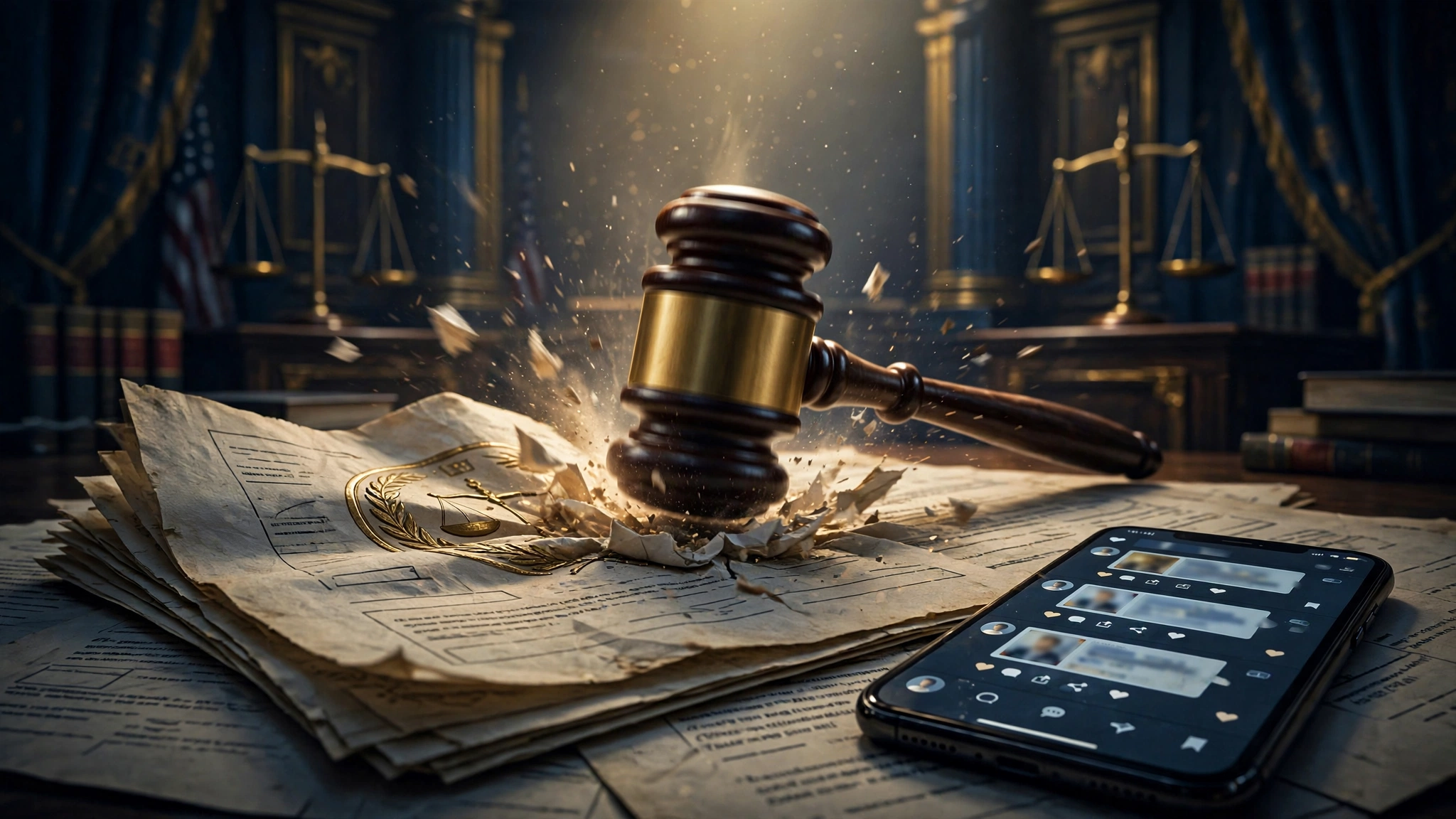
Meta has been ordered to pay $25 billion by a judge in New Mexico, in a ruling handed down on Wednesday 21 October that ranks among the largest penalties ever imposed on a company in US history (CNN, Reuters). Judge Francis Mathew issued the judgment after a jury found that Meta systematically deceived users about how their personal data was handled.
The case reaches back to the Cambridge Analytica scandal, in which the data of roughly 87 million Facebook users ended up in the hands of a political consulting firm without their consent (CNN, USA Today). That scandal broke in 2018 and triggered investigations around the world — but while most of them ended in settlements, New Mexico took its case all the way to a jury.
How the number reached $219 billion — then fell to $25 billion
The mathematics explains both the scale of the judgment and why it did not go further. In September, the jury found that Meta had committed more than 43 million violations of New Mexico’s consumer protection laws (USA Today). State law allows a penalty of up to $5,000 per violation, which by the judge’s calculation produced a figure of $219 billion. Judge Mathew reduced that amount to $25 billion in the final judgment (Reuters).
Even reduced, the number is staggering — it is more than the annual economic output of many countries. But the gap between $219 billion and $25 billion also matters: it signals that the court recognised a limit to what a per-violation formula can sensibly produce against a company of Meta’s size, even in a case where the jury’s findings were sweeping.
Meta will appeal; New Mexico sends a message
Meta has already said it will fight the ruling. Its chief legal officer, C.J. Mahoney, argued that the judgment effectively makes it nearly impossible to do business in New Mexico (TheWrap). An appeal means the money will not move soon — large judgments like this typically spend years in higher courts, and are often reduced further along the way.
New Mexico’s attorney general, Raúl Torrez, framed the result as a clear message to Silicon Valley, and said the penalty money will go towards education in the state (USA Today). That detail matters politically: the case was argued not just as punishment, but as compensation to the public whose data was misused.
Why $25 billion is still small for Meta
Here is the uncomfortable context. Meta’s market value stands at around $1.8 trillion, and its annual revenue runs above $200 billion (Manila Bulletin). Put against those figures, a $25 billion penalty is roughly an eighth of one year’s revenue — a serious fine, but not an existential one. It is also less than 1.5% of what the company is worth.
First, this is why per-violation math mattered. Regulators have struggled for years with fines that tech giants can absorb as a cost of doing business. New Mexico’s law, applied violation by violation, produced a number so large that even the judge stepped back from it — yet the reduced figure is still the kind of headline penalty lawmakers elsewhere have usually failed to land.
Second, the precedent may matter more than the payment. Other US states have similar consumer-protection statutes. If New Mexico’s approach survives appeal, it hands every state attorney general a template: count the violations, not just the harm, and the fine scales itself. That possibility, more than the $25 billion itself, is what Meta’s legal team will be working hardest to kill.
Third, for ordinary users, nothing changes overnight. Your Facebook and Instagram accounts work exactly as before, and no payout to individual users has been announced — the money in this judgment is directed to the state, with education named as the beneficiary (USA Today). The realistic takeaway is the older lesson, freshly underlined: what you share on free platforms is the product, and courts on two continents are slowly putting a price on abusing it. If this story prompts one useful action, it is reviewing which apps and quizzes have access to your account — the same third-party access route that caused this scandal is the one we explained when covering ChatGPT’s new locked chats and what they do (and don’t) protect.
There is also a quieter lesson in how this case was won. It was not built on a new privacy law written for the internet age — it was built on a consumer-protection statute, the kind of law written to stop shops misleading customers, applied to a platform with billions of users. That is why the violation count could climb into the tens of millions: every user deceived was, in the jury’s eyes, a separate broken promise. For privacy campaigners, it is proof that the old legal toolbox still has teeth. For platforms, it is a warning that their exposure does not depend on parliaments passing new tech laws at all.
The appeal will decide whether $25 billion is a turning point or just the largest number ever written on a fine that shrank on its way through the courts. Either way, the era of treating user data as a free resource is getting more expensive.