
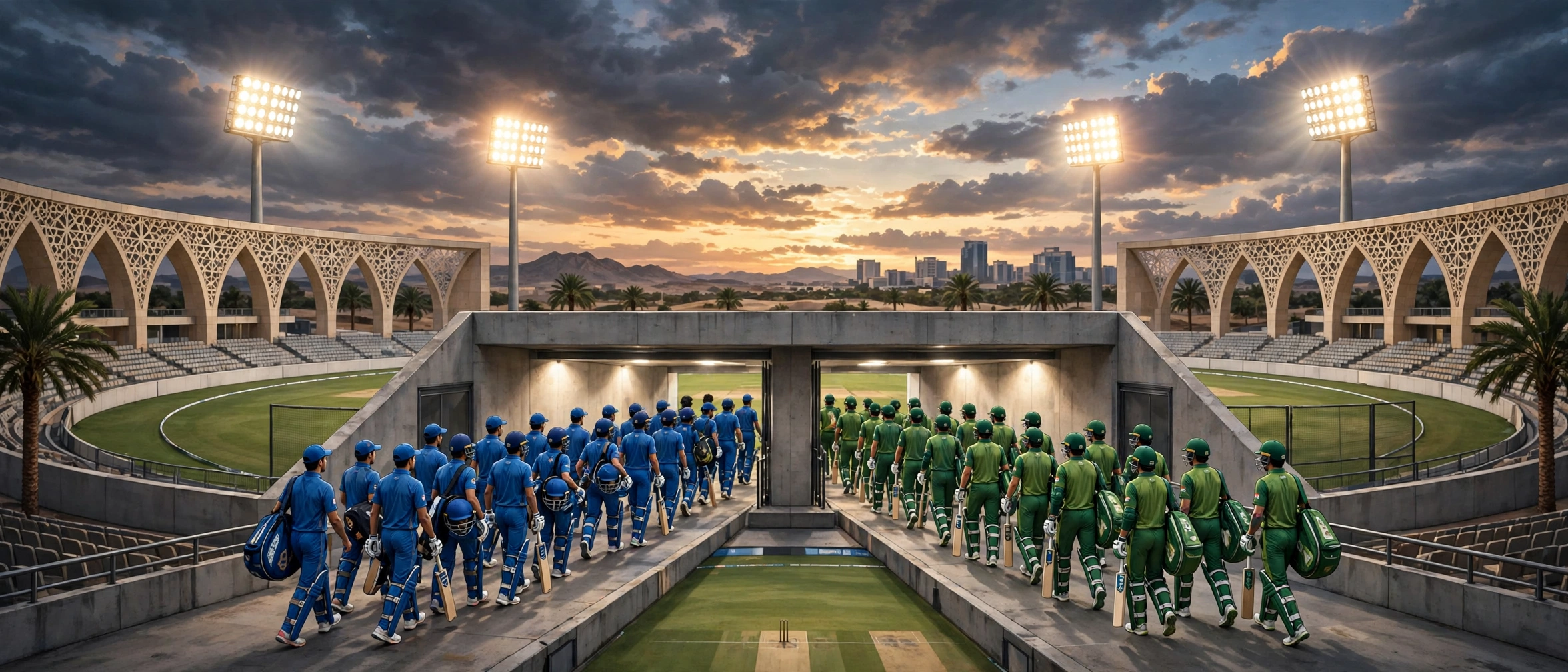

The fixture is locked in
India A will face Pakistan A on November 22 in Doha, after the Asian Cricket Council confirmed the groups and schedule for the Rising Stars Asia Cup 2026, which runs from November 19 to 29 (India TV News). The 50-over tournament — formerly known as the ACC Emerging Teams Asia Cup and running since 2013 — features eight ‘A’ sides, with India having lifted the trophy only once in its seven editions (PTI via Lokmat Times).
India and Pakistan have been drawn together in Group B alongside Nepal and the UAE, while Group A contains Sri Lanka A, Bangladesh A, Afghanistan A and Hong Kong (India TV News).
India’s path through the group
India A open their campaign against Nepal on November 20, meet Pakistan A two days later on November 22, and finish the group stage against the UAE on November 24 (India TV News). The format is a single round-robin — three group matches each — with the top two from each group advancing to semi-finals on November 26 and 27 and a final on November 29 (India TV News).
Doha hosts the tournament at two venues: West End Park International Cricket Stadium stages the majority of matches including the final, while the University of Doha for Science and Technology Cricket Ground hosts the opening fixture on November 19, when Bangladesh A play Hong Kong A (India TV News).
One wrinkle in Group B deserves attention: Nepal, the UAE and Hong Kong are expected to field their strongest national squads rather than development sides, which makes the “easy” fixtures in this group less easy than the ‘A’ labels suggest (PTI via Lokmat Times).
Last year, Pakistan A owned this tournament
Anyone treating November 22 as a routine group game should look at what happened in the 2025 edition. Pakistan A beat India A by eight wickets in the group stage, dismissing them for 136 and completing the chase in just 13.2 overs, and went on to win the trophy — beating Sri Lanka A by five runs in the semi-final and then Bangladesh A in a final that finished tied and was decided by a Super Over (India TV News).
India A’s own campaign was a study in near-misses. They opened by thrashing the UAE by 148 runs — 297/4 against 149/7 — beat Oman by six wickets to reach the semi-finals, and then lost that semi-final to Bangladesh A in the cruellest way available: scores level at 194/6, Bangladesh advancing through a Super Over (India TV News).
Why an ‘A’ team match carries this much weight
First, it is the only guaranteed India–Pakistan meeting of the winter outside the senior calendar. The senior sides’ meetings depend on multi-team events and politics; the ‘A’ circuit quietly guarantees the fixture. There is even a second helping this month — the two countries’ Under-19 sides are scheduled to meet on November 8 at the U19 Asia Cup in Oman, which runs November 5 to 14 (PTI via Lokmat Times).
Second, this tournament is a genuine selection corridor. The players on show in Doha are the next in line for senior caps, and performances against the arch-rivals carry an outsized weight with selectors and fans alike. India’s senior side is currently demonstrating exactly how deep that pipeline runs — a squad in transition has spent this week producing record chases of 226 in Christchurch and 209 in Raipur against New Zealand.
Third, Pakistan A have turned this event into a habit. Defending champions, winners over India in the group game and holders of the trophy through two Super Over finishes in the knockouts — that is not luck, it is a pattern of handling pressure moments better than their rivals at this level. November 22 is India’s chance to break the pattern, and Pakistan’s to extend it.
What happens next
Squads are yet to be announced, and they will shape the story: how many players with senior experience each board sends, and whether Nepal’s senior-heavy side turns Group B into a three-way fight. The date to circle is November 22. In a month when the senior India–Pakistan fixture list is empty, the ‘A’ teams in Doha are carrying the rivalry on their own — and on last year’s evidence, they are more than capable of it.