

Highlights
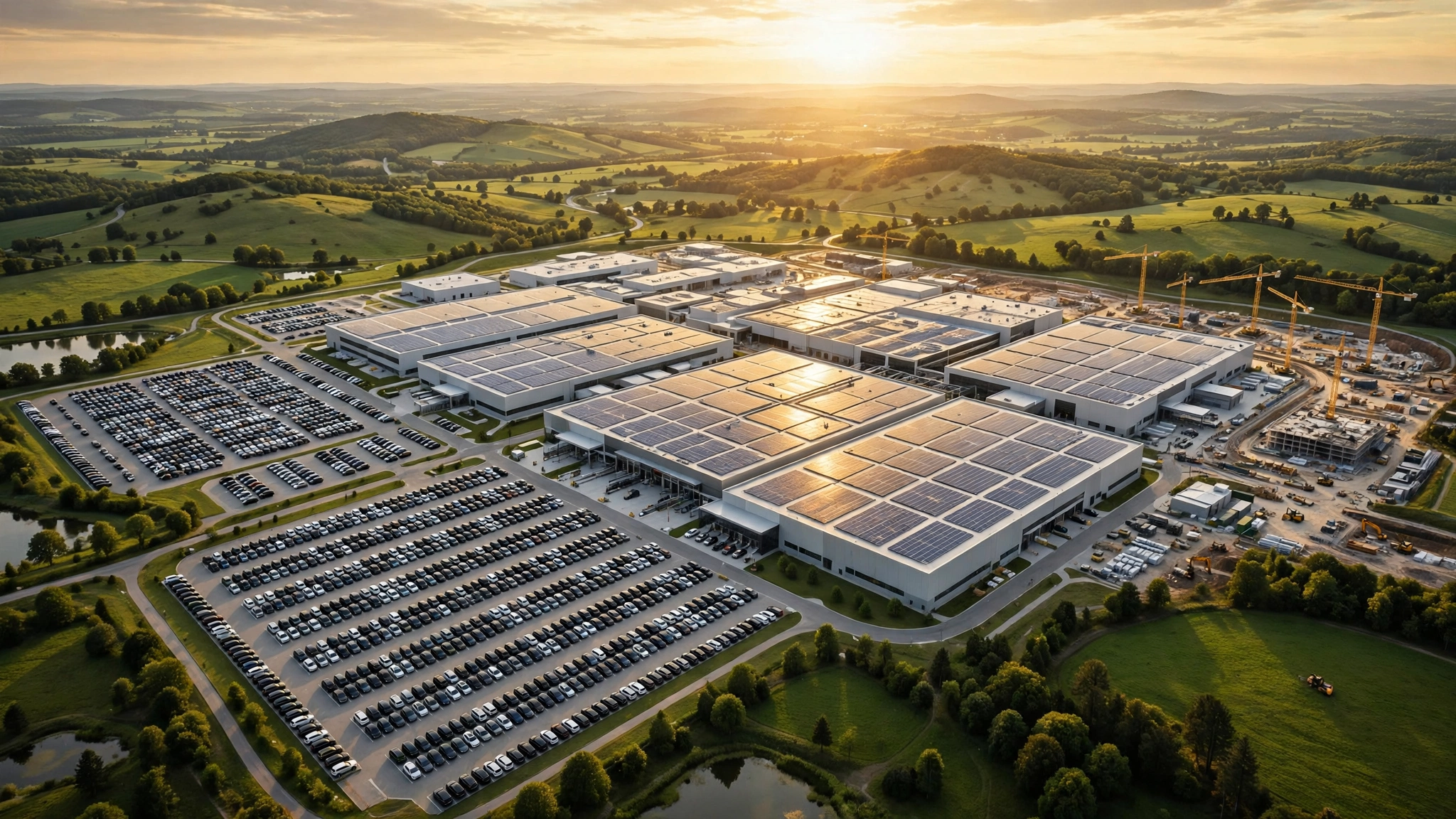
- Audi, Volkswagen’s premium brand, will invest $4.2 billion in its first US plant, near Macon, Georgia, creating about 4,500 jobs with capacity for up to 200,000 vehicles a year
- Trump announced it at a Perry, Georgia rally and credited his tariffs: “Without tariffs, they wouldn’t be coming in”
- One detail already differs: Trump said construction begins “next month”; Audi’s own release says construction starts next year, with production only in the early 2030s
- The plant will build Audi’s “biggest and most premium SUVs” — and lands while Volkswagen is cutting up to 100,000 jobs in Germany by 2030
A rally, a CEO and a very large number
US President Donald Trump announced on Saturday that German automaker Audi planned to invest $4.2 billion to build its first factory in the United States, 10 days before midterm elections that will determine control of Congress (NDTV / AP). Audi confirmed the investment in its own release, saying the plant would create about 4,500 jobs (NDTV / AP).
Trump’s pitch, delivered at a campaign rally in Perry, Georgia, was explicit about who deserved the credit. “I’m thrilled to announce a massive auto manufacturing investment in the great state of Georgia by a fantastic company,” he said, adding: “Audi has just committed to invest $4.2 billion dollars in nearby Macon, Georgia, to begin the construction next month on a massive plant that will produce 200,000 cars a year” (NDTV / AP). In the fuller version of the remarks reported by The Economic Times, he went further: “Without tariffs, they wouldn’t be coming in,” and “Think of that. 200,000 cars a year. That’s incredible” — calling it “the single largest investment in U.S. auto industry history, modern history,” a superlative that is the President’s own claim (The Economic Times).
What Audi itself actually committed to
Audi’s chief executive Gernot Döllner joined Trump on stage, and his language was notably longer-term than the rally’s. The plant would be producing “our biggest and most premium SUVs”, he said, adding: “This is a long-term investment, because we believe in the American market” (HK Business Wire / AP). In its release, Audi framed the plant as strategy rather than politics: “The planned investment intends to mark a long-term commitment to the United States and to establish North America as a third major pillar of Audi’s global production network alongside Europe and China” (NDTV / AP).
That difference in tone comes with a difference in timetable, and it is worth stating plainly. Trump said construction would begin “next month”. Audi’s release says construction is scheduled to begin next year — 2027 — with production starting in the early 2030s (NDTV / AP; HK Business Wire / AP). In other words: the jobs and the 200,000-car capacity are committed, but no Georgia-built Audi reaches a showroom this decade.
Why Audi needs America — and why America is complicated for Volkswagen
The plant is also a defensive move. Audi’s parent, the 10-brand Volkswagen Group, has struggled with US tariffs, Chinese competition and patchy demand in Europe — and in September it struck a deal with unions to cut up to 100,000 jobs by 2030, in what has been described as the largest restructuring ever carried out in the global auto industry (NDTV / AP). Building its highest-margin SUVs inside the tariff wall is the obvious hedge, and Audi is not alone: General Motors, Toyota and Ford have also announced plans to expand US plants or shift production from overseas (NDTV / AP).
The politics cut both ways. The announcement hands Trump a manufacturing win in a battleground state where Republicans are trying to unseat Democratic Senator Jon Ossoff — though the party’s candidate, Representative Mike Collins, is trailing in the polls ahead of the November 3 vote (The Economic Times). Democrats, meanwhile, are hoping grievances over Trump’s trade policies and the cost of living work in their favour in the midterms (NDTV / AP).
What to make of the $4.2 billion headline
First, the commitment is real, but the calendar is long. Factory announcements are the cheapest part of the auto industry; the test is steel in the ground. Audi’s own schedule — construction from next year, production in the early 2030s — means this plant will be built across at least two US presidencies, and could still be reshaped by whoever holds power in between. The gap between Trump’s “next month” and Audi’s “next year” is small in words and large in meaning.
Second, tariffs explain the location, not necessarily the investment. Audi’s biggest, most premium SUVs are its profit engine in its largest market; a US plant protects that engine whether or not one credits trade policy for it. What tariffs changed is the cost of not building in America — which is why carmakers from GM to Toyota are making parallel moves (NDTV / AP).
Third, watch Macon, not the rally. For Georgia, 4,500 jobs at up to 200,000 cars a year would make the plant one of the state’s defining industrial projects — if it proceeds on Audi’s stated terms. The milestones that matter now are unglamorous: site work in 2027, supplier announcements, and whether the early-2030s production date holds. That, more than any election-week headline, will decide whether Saturday’s announcement was a turning point or a very expensive promise.